14 April 2020

Hip Hop Public Health Launches 20 Seconds or More Initiative Harnessing the Power of Music to Encourage Hand Washing and Other Safety Protocols Amongst Young People to Battle the COVID-19 Pandemic

by
Rap Icon Doug E. Fresh and Songwriter Artie Green Collaborated on New Song and Video, 20 Seconds or More, Featuring 40 Recording Artists, Entertainers, Medical Workers, Athletes, and Business and Civic Leaders
Rap Icon Doug E. Fresh and Songwriter Artie Green Collaborated on New Song and Video, 20 Seconds or More, Featuring 40 Recording Artists, Entertainers, Medical Workers, Athletes, and Business and Civic Leaders PRNewsfoto/Hip Hop Public Health)
Hip Hop Public Health (HHPH) the national nonprofit organization dedicated to fostering positive health behavior change through the power of hip hop music since 2005, today launched 20 Seconds or More, a new initiative to encourage hand washing and other safety protocols among the nation's youth. 

The focal point of 20 Seconds or More is a lively, three-minute music video featuring pioneering rapper and community health advocate, Doug E. Fresh, along with more than 40 noted individuals from the entertainment, sports, medical, civic and business sectors. These include a range of talents such as rappers DMC, Monie Love and Chuck D, pop and R&B singers Ashanti and Jordin Sparks, along with Jamie Foxx, Cedric The Entertainer, UNC NBA prospect Cole Anthony, Olympian Benita Fitzgerald Mosley and many others

Dr. Olajide Williams, Chief of Staff, Department of Neurology, NewYork-Presbyterian/Columbia University Irving Medical Center, and Doug E. Fresh are the Co-Founders of HHPH and are spearheading the initiative with HHPH Executive Director and CEO, Lori Rose Benson. Philanthropic support for the initiative has been provided by the Bristol Myers Squibb Foundation and the Bristol Myers Squibb Black Organization for Leadership Development, an employee resource group.

Hip Hop Public Health produced the song 20 Seconds or More in response to messaging failures governing the pandemic in the US. The song was written by Artie Green, and features Doug E. Fresh and Gerry Gunn with medical oversight by Dr. Williams.

20 Seconds or More is available on Spotify and will be on additional streaming music platforms this week, with the hopes of inspiring dance/rapping challenges to share these resources widely. 

The song's catchy refrain, "Wash your hands everybody, and everybody just wash your hands," is inspired by the classic hip hop riff that began with Big Hank and has been adopted by MCs and hip hop fans of all ages and backgrounds as a global anthem.
"The main goal of 20 Seconds or More is to bring together art, science and social media innovation to help fight the COVID-19 health crisis plaguing our nation and the world today," says Doug E. Fresh. "As an artist and a health advocate, I have the responsibility of using my platform and my voice to make a change, beginning with young people, to help save lives and stop the spread of this virus."
"Without a doubt, COVID-19 is one of the most challenging health crises of modern times," says Dr. Olajide Williams. "Personal safety measures are important against the highly contagious Coronavirus, whose infectious profile includes a large number of silent 'asymptomatic' carriers (18-30%) capable of infecting others, and those with mild manifestations of the disease."
The few community defenses against the devastating effects of COVID-19 include home quarantine, social distancing, and proper frequent hand washing. Data shows that these practices mitigate the spread of the virus and have helped to reduce transmission and sickness in countries that have implemented them.
Adds Dr. Williams, "We now know that younger people are more likely to have mild manifestations or silent infection compared to older individuals, and that communities of color are disproportionately affected. These groups need targeted health communication solutions for improving compliance with hand washing, social distancing and home quarantine. 20 Seconds or More is such a campaign, designed to motivate young people and communities of color to engage in regular hand washing and social distancing, while also appealing to the general public."
"This is the era of personal responsibility, when the simple things we choose to do or not do have life and death consequences," says Lori Rose Benson, Executive Director and CEO of Hip Hop Public Health. "Personal responsibility is empowered by education, social conditioning, and cultural relevance. We could therefore think of no better way to get this message across than by launching 20 Seconds or More. This is a life-saving, action-oriented platform that enables young people and all of us to recognize and utilize our power for the collective good health of our communities, the nation and the world."
In addition to the song and video, HHPH has created multiple opportunities for the public to get involved in the 20 Seconds or More movement. Working in collaboration with OPEN, the Online Physical Education Network, HHPH created free lesson plans and other health educational materials to be shared with teachers, school leaders, parents and students to support remote learning and staying active at home.

 HHPH has also created opportunities for young people, educators and artists to serve as Ambassadors, or "HHPH MCs" charged with utilizing their social networks and platforms to inspire dance and rap challenges, while encouraging adherence to COVID-19 safety protocols. HHPH's network of MCs (Masters of Culture) helps to amplify key health messages to empower youth and teach them how to care for their physical and mental health.

HHPH is also sharing frequent updates and information regarding COVID-19 through a series of studies, papers and interactive sessions with Dr. Williams. These include the COVID-19 Industry Rapid Response Q&A with The Partnership for a Healthier America and HHPH's latest blog post with engaging resources for families to stay active at home.

20 Seconds or More - The Video:


The 20 Seconds or More video was produced by IDEKO, a New York based experiential production agency.

13 April 2020

Alight Announces #InOurHands Global Campaign To Create Unity and Share Messaging About COVID-19 [Video Included]

by
Alight Announces #InOurHands Global Campaign To Create Unity and Share Messaging About COVID-19
Alight Announces #InOurHands Global Campaign To Create Unity and Share Messaging About COVID-19 (image via Alight)
Alight, formerly known as the American Refugee Committee, has announced the global launch of the IN OUR HANDS campaign. 

Developed in conjunction with leading nonprofit design studio, IDEO.org, the campaign aims to unite people during a time of social distancing while also sharing bite-sized, positive messaging derived from World Health Organization (WHO) guidelines as a means to simply and effectively offer uplifting messages. 

Alight is joining forces with influencers, community leaders and partners around the world to help raise awareness and demonstrate how together, hand-in-hand, we can help slow the staggering rate at which COVID-19 continues to spread.
"We work closely with refugees in camps and settlements who don't have the systems in place to be protected from the coronavirus and also haven't necessarily received much information about the virus," says Alight's East Africa Representative Bernad Ochieng Ojwang. "So, as we've been working to prepare the communities of refugees and displaced people we serve every day for COVID-19, we knew we also wanted to create a campaign that could both reach other remote and marginalized communities with information and unite the global community against this global pandemic."
"Designers are looking to apply their creativity and craft to COVID-19 related efforts in this moment where their skills are most needed. We are optimistic that these messages can really shift behaviors and prevent the further spread of COVID-19 in vulnerable communities in East Africa and around the world," says Jocelyn Wyatt, CEO of IDEO.org.
The campaign centers around influencers coming together to express love and solidarity with all of those doing their part to stop the spread of COVID-19 using #InOurHands. They are writing messages of love and solidarity on the palms of their hands, sharing it and encouraging others to do the same, with the hope to send love to more than 28.7 million people worldwide.

Influencers from all over the world are already participating and posting across their social channels, including international musician, K'naan, along with Natalia Tewa, Millard Ayo, Idris Sultan, Harmonize TZ, Benjamin Fernandes, George Kagwe, Aar Maanta and Ayaan Mohallim.

The Video:


About Alight:

Established in 1978 by founder Neal Ball, Alight, formerly known as American Refugee Committee, provides health care, clean water, shelter, protection and economic opportunities to more than 3.5 million people in 17 countries each year. 

Alight believes in the incredible creativity, potential, and ingenuity of the displaced and works to shine a light on their humanity, the tremendous amount of good that's already happening and the possibilities to do more. 

The organization exists to see and help every person make meaningful change in the world – from displaced and marginalized communities in Africa, Asia and the Americas to...anyone, anywhere. 

Learn more about Alight at www.wearealight.org.
SOURCE: Alight

12 April 2020

Coronavirus: Polling Shows British Public Values Compassion Over Economic Stability

by
Coronavirus: Polling Shows British Public Values Compassion Over Economic Stability
Coronavirus: Polling Shows British Public Values Compassion Over Economic Stability (Ben Birchall/PA)

These are uncertain, anxious and unnerving times. The COVID-19 pandemic is affecting every one of us in some way, from physical and mental health to income, from routine and way of life to concern for others. There are, though, causes for hope and optimism in amongst the unease and discomfort. New polling shows the British public values the life and health of the nation’s older population over longer-term economic prosperity.

The UK government, like so many others, has had to weigh these issues against each other in its attempts to slow the spread of COVID-19. Difficult decisions have been taken in the interests of protecting public health that will inevitably hurt the economy. Businesses have been forced to close and people told to stay at home. Companies are placing staff on furlough leave in far greater numbers than the government first predicted, and yet these results suggest that the public is on board with an approach that focuses on keeping people alive rather than keeping businesses running.

Among 2,093 adults, we found that 55% agreed that the health of today’s older generations is more important than the long-term economic prosperity of future generations, and only 8% disagreed.

Respondents also said they valued “being compassionate” as a trait in others (68%) and in leaders and senior politicians (44%) above other character qualities, such as being reflective, courageous, resilient, or wise. This is not a million miles away from other research showing that junior and established professionals value honesty, fairness and kindness in the workplace. Such moral virtues enable us to act well in situations that demand ethical responses, none more so than the crisis that currently envelopes us. The crisis is real, and the situation stark.

The poll results reflect that people are consumed by the immediacy and urgency of the threat of COVID-19, and are finding it difficult to consider more abstract concepts such as future economic prosperity or when any semblance of “normality” will return.

Stockpiling turns to compassion

Respondents also place public services and being aware of those around us in high regard; “being of service to others” (42%) and “having community awareness” (40%) were also character qualities that we value in one another at this time of national and international crisis.

It is understandable that compassion is of the utmost value to us at the moment. The uniqueness of this current crisis has challenged everyone to respond in some way, be it ethically, socially, selfishly, or just by living differently. Over the past few weeks, we’ve seen examples of people behaving in ways that has both disappointed and inspired.

We seem to have come through an initial self-preservation response to the crisis, manifesting itself in long lines at supermarkets, with trolleys piled high with more goods than we need. More recently, we are now seeing and sharing scenes of people coming out of their homes to show their gratitude to key workers – which will surely be one of the enduring symbols of our shared compassion.

Billboards that normally display adverts in London’s Piccadilly Circus carry signs thanking key workers.
Billboards that normally display adverts in London’s Piccadilly Circus carry signs thanking key workers. (PA)

In the midst of such a unique and precarious crisis, the poll results reflect a human instinct to care for each another and ourselves.

That said, the findings show that there are differences between generations. While 58% of those aged 55 agreed that caring for lives was more important than economic prosperity, the figure dropped to 49% among those aged 34 and under.

Again, there were generational differences in how respondents valued other people, with younger people aged under 35 valuing compassion in others less (62%) than those aged over 55 (75%). Younger people also valued these traits slightly less in leaders and senior politicians than older people. So, while we are showing ourselves to be a nation that values compassion in this time of crisis, generally, there are degrees of compassion that differ by generation.

Asking such a potentially divisive question about short-term care for lives versus longer-term economic prosperity was designed to make respondents give a “false choice”. If we could protect both, then we would – but we can’t. While support for the short-term reality of protecting life over the more abstract notion of future economic prosperity is not a particularly surprising finding, the degree to which the public favour it is heartwarming.

The findings, overall, reflect the importance of recognising positive qualities in people around us, as well as the importance of character to our own well-being. We value the judgement and wisdom of our leaders, but recognise, at all ages, the need for care and compassion towards one another at this time of unprecedented crisis.The Conversation

About Today's Contributor:

James Arthur, Director of the Jubilee Centre for Character and Virtues, University of Birmingham

This article is republished from The Conversation under a Creative Commons license. 

10 April 2020

Detroit Artist Unites City by Creating Music Video Honoring Front-Liners [Video Included]

by
Detroit Artist Unites City by Creating Music Video Honoring Front-Liners [Video Included]
Dempster from Detroit Performing in Townhouse Square
Popular Detroit-area artist, Robert Dempster, has produced a music video for a song he wrote honoring those at the very front line of the COVID-19 coronavirus pandemic called Heroes Work Here

The inspiration for the song and video came to him when talking to family members and friends who are working the front lines at some of Detroit's most overwhelmed hospitals due to this deadly virus. "I've been so moved by the stories they tell me and by what I've seen with my own eyes, that the lyrics just came to me," said Dempster.

The song – and the video - have been very well-received in this community and local hospitals have been encouraging their workers to watch and listen to it. "The response to this video has been more than I ever anticipated," Dempster said in a recent radio interview.


Dempster has been in the Detroit music and art scene for years. He enjoys the unique distinction of heading up the very first band that ever performed at the iconic Grande Ballroom in the 1960's and has performed with such rock and roll legends as The Yardbirds, Bob Seger and The MC-5. He also wrote and performed the hit single Blue Skies, Yellow Sun

His Studio D in Birmingham, Michigan was home to some of the biggest names in the art world – both musical and visual fine art.

Detroit Artist Unites City by Creating Music Video Honoring Front-Liners [Video Included]
Detroit Artist Unites City by Creating Music Video Honoring Front-Liners (screengrab)

SOURCE: Robert Dempster

9 April 2020

5 Reasons The World Needs WHO (World Health Organization) To Fight The COVID-19 Pandemic

by
5 Reasons The World Needs WHO (World Health Organization) To Fight The COVID-19 Pandemic
5 Reasons The World Needs WHO (World Health Organization) To Fight The COVID-19 Pandemic (screengrab)

1) Helping countries to prepare and respond

WHO has issued a COVID-19 Strategic Preparedness and Response Plan, which identifies the major actions countries need to take, and the resources needed to carry them out.

The plan, which is updated as fresh information and data improve WHO's understanding of the characteristics of the virus and how to respond, acts as a guide for developing country-specific plans.

The health agency's six regional offices, and 150 country offices, work closely with governments around the world to prepare their health systems for the ravages of COVID-19, and to respond effectively when cases arrive and begin to mount.

With partners, WHO set up the COVID-19 Solidarity Response Fund, to ensure patients get the care they need, and frontline workers get essential supplies and information; and to accelerate research and development of a vaccine and treatments for all who need them.

With donations from governments, the private sector and individuals, more than $800 million has been pledged or received for the response so far.

2) Providing accurate information, busting dangerous myths

The internet is awash with information about the pandemic, some of it useful, some of it false or misleading. In the midst of this “infodemic”, WHO is producing accurate, useful guidance that can help save lives.

This includes around 50 pieces of technical advice for the public, health workers and countries, with evidence-based guidance on every element of the response, and exploding dangerous myths.

The health agency benefits from the expertise of a global network of health professionals and scientists, including epidemiologists, clinicians and virologists, to ensure that the response is as comprehensive, authoritative and representative as possible.

To ensure information is correct and helpful, WHO set up a team to give everyone access to timely, accurate and easy-to-understand advice, from trusted sources. In addition, daily situation reports and press briefings, as well as briefings with governments, are keeping the world informed about the latest data, information and evidence.

Many social media and tech companies are working closely with WHO to aid the flow of reliable information, including Instagram, Linkedin and TikTok; and chatbots on the Whatsapp and Viber platforms have garnered millions of followers, sending out timely updates and reports.

3) Ensuring vital supplies reach frontline health workers

Personal protective equipment is essential to ensure health professionals are able to save lives, including their own. So far, WHO has shipped more than two million items of personal protective equipment to 133 countries, and is preparing to ship another two million items in the coming weeks. More than a million diagnostic tests have been dispatched to 126 countries, in all regions, and more are being sourced.

However, far more is needed, and WHO is working with the International Chamber of Commerce, the World Economic Forum, and others in the private sector, to ramp up the production and distribution of essential medical supplies.

On 8 April, WHO launched a “UN COVID-19 Supply Chain Task Force”, which aims to dramatically increase the supply of essential protective equipment where it is needed.

4) Training and mobilizing health workers

WHO is aiming to train millions of health workers, via its OpenWHO platform. Thanks to this online tool, life-saving knowledge is being transferred to frontline personnel by the Organization, and its key partners.

Users take part in a worldwide, social learning network, based on interactive, online courses and materials covering a variety of subjects. OpenWHO also serves as a forum for the rapid sharing of public health expertise, and in-depth discussion and feedback on key issues. So far, more than 1.2 million people have enrolled in 43 languages.

Countries are also being supported by experts, deployed around the world by the WHO's Global Outbreak Alert and Response Network (GOARN). During outbreaks, the network ensures that the right technical expertise and skills are on the ground where and when they are needed most.

Emergency Medical Teams are also an important part of the global health workforce. These teams are highly trained, and self-sufficient, and are sent to places identified as disaster or emergency zones.

5) The search for a vaccine

Laboratories in many countries are already conducting tests that, it is hoped, will eventually lead to a vaccine. In an attempt to corral these efforts, WHO brought together 400 of the world's leading researchers in February, to identify research priorities.

The agency launched a “Solidarity Trial”, an international clinical trial, involving 90 countries, to help find effective treatment. The aim is to rapidly discover whether any existing drugs can slow the progression of the disease, or improve survival.

To better understand the virus, WHO has developed research protocols that are being used in more than 40 countries, in a coordinated way, and some 130 scientists, funders and manufacturers from around the world have signed a statement committing to work with WHO to speed the development of a vaccine against COVID-19.

Helping the poorest and most vulnerable

In his 8 April press briefing, Tedros said that WHO is involved with many other initiatives and actions, but all of them come under these five essential pillars.

The agency's focus, he said, is “on working with countries and with partners to bring the world together to confront this common threat together”.

A particular concern, he added, is for the world's poorest and most vulnerable, in all countries, and WHO is committed to “serve all people of the world with equity, objectivity and neutrality.”


SOURCE: UN News Centre

6 April 2020

Free Information Book Explaining the Coronavirus to Children, Illustrated by Gruffalo Illustrator

by
Released Today: Free Information Book Explaining the Coronavirus to Children, Illustrated by Gruffalo Illustrator
Free Information Book Explaining the Coronavirus to Children, Illustrated by Gruffalo Illustrator
Axel Scheffler has illustrated a digital book for primary school age children, free for anyone to read on screen or print out, about the coronavirus and the measures taken to control it. 

Published by award-winning independent children's book publisher, Nosy Crow, and written by staff within the publishing company, the book has had expert input: Professor Graham Medley of the London School of Hygiene & Tropical Medicine acted as a consultant, and the company also had advice from two head teachers and a child psychologist.

The book answers key questions in simple language appropriate for 5 to 9 year olds:
  • What is the coronavirus?
  • How do you catch the coronavirus?
  • What happens if you catch the coronavirus?
  • Why are people worried about catching the coronavirus?
  • Is there a cure for the coronavirus?
  • Why are some places we normally go to closed?
  • What can I do to help?
  • What's going to happen next?
Nosy Crow wants to make sure that this book is accessible to every child and family and so the book is offered totally free of charge to anyone who wants to read it. However, the company suggests, at the back of the book, that families might make a donation to help our health service if they find the book useful:(www.nhscharitiestogether.co.uk)
Kate Wilson, Managing Director of Nosy Crow, said:
"We were very aware that many parents and carers are struggling to explain the current extraordinary situation to children, many of whom are frightened and confused. We thought that the best thing we could do would be to use our skills to produce a free book to explain and, where possible, reassure children. We asked Axel, whose work is so familiar and so loved, to illustrate it. He was happy to do it, and did it extraordinarily quickly. Meanwhile, having heard Professor Medley interviewed by the BBC, we looked him up and wrote to him, and despite his huge workload, he reviewed the book over a weekend, and we were able to incorporate his suggestions, together with those of two head teachers and a child psychologist, into the final version of the book. We hope it helps answer difficult questions in difficult times."
Axel Scheffler, illustrator of The Gruffalo, said:
"I asked myself what I could do as an children's illustrator to inform, as well as entertain, my readers here and abroad. So I was glad when my publisher, Nosy Crow, asked me to illustrate this question-and-answer book about the coronavirus. I think it is extremely important for children and families to have access to good and reliable information in this unprecedented crisis, and I hope that the popularity of the books I've done with Julia Donaldson will ensure that this digital book will reach many children who are now slightly older, but might still remember our picture books."
Professor Graham Medley, Professor of Infectious Disease Modelling at the London School of Hygiene & Tropical Medicine, said:
"This pandemic is changing children's lives across the globe and will have a lasting impact on us all. Helping children understand what is going on is an important step in helping them cope and making them part of the story - this is something that we are all going through, not something being done to them. This book puts children IN the picture rather just watching it happen, and in a way that makes the scary parts easier to cope with."
Free Information Book Explaining the Coronavirus to Children, Illustrated by Gruffalo Illustrator

About Axel Scheffler

Axel Scheffler is an award-winning, internationally-acclaimed illustrator of some of the most well-loved children's books. His books have been published in many languages and his work has been exhibited all around the world. 

Axel is best known for his partnership with Julia Donaldson, on books including Room on the Broom and The Gruffalo

For Nosy Crow, Axel has illustrated a number of other highly successful titles, including the Pip and Posy series, The Grunts and the bestselling Flip Flap series. 

Axel lives in London with his partner and daughter..

About Nosy Crow

Nosy Crow is a multi-award-winning publisher of child-focused, parent-friendly children's books and eBooks for ages 0 – 14. It began publishing in 2011 and has won the Independent Publishers Guild's Children's Publisher of the Year Award three times. It was named Children's Publisher of the Year at the British Book Awards in April 2017 and in April 2019, and in 2016 was awarded the Independent Publishers Guild Independent Publisher of the Year. Other prizes include a Queen's Award for Enterprise – International Trade, The Stationers' Company Innovation Excellence Award, The Nectar Business Small Business of the Year Award, The Growing Business Awards Young Company of the Year Award and many others for both individual books and for its marketing and international sales. Nosy Crow is already the 12th biggest children's book publisher in the UK, based on Nielsen-tracked sales to consumers.
SOURCE: Nosy Crow

1 April 2020

"Corona Wuhan Na" - New Coronavirus Comedy Song But With A Serious Message [Video And Lyrics Included]

by
"Corona Wuhan Na" - New Coronavirus Comedy Song But With A Serious Message
"Corona Wuhan Na" - New Coronavirus Comedy Song But With A Serious Message (screengrab)
Ampersand Records USA has announced a new music video parody song Corona Wuhan Na based off the pop hit Havana oh nana

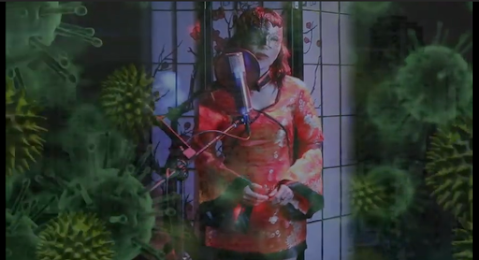
Sung by masked Asian Artist Dark Venus and featured on her YouTube channel, the song relays a direct and to the point comedic perspective with a subtle serious overtone.
"You might have to watch this several times to catch all the jokes," says Robert Harris, CEO at Ampersand Records USA. "Overall, the message is serious and should be taken to heart."
"Through humor, we are ultimately trying to bring added awareness to fight the Coronavirus here in the US," says Harris.
""Corona Wuhan Na" - New Coronavirus Comedy Song But With A Serious Message
"Corona Wuhan Na" - New Coronavirus Comedy Song But With A Serious Message (screengrab)
A write up in the description area underneath the YouTube video points out Taiwan's unique ability to contain the threat (currently only 283 cases, 2 deaths). Dark Venus who is just starting her music career with several YouTube releases prior to this, hails from Taiwan.

The Corona Wuhan Na Video:

The Lyrics:

Corona Wuhan Na- new lyrics written by Bob Harris and Dark Venus
Corona WuHan Na
Stuck in Topeka with Corona WuHan Na
Not glad to see ya cause I got the Novel Flu
I think I got it just by shaking hands with you

You didn't ask me like what I'm doin' (Like what I'm really doing)
When I was keeping 6 feet away
(It wasn't far enough)
I should have flown to WuHan or Taipei (Airports closed today)
Maybe I should have drank some Lysol Spray

Corona WuHan Na
Lockdowns and curfews from Corona WuHan Na
I bought a space suit for Corona WuHan Na
I'm really freakin from Corona
Corona WuHan Na...

Always thought a facemask was in fashion
Now I have to wear one for protection
The Flu Vaccine don't work on this infection
Maybe I also have the Rabies pathogen

Ooh-ooh-ooh,
I still was gonna get it
I knew that I would get it
Got me feeling like,
Ooh-ooh-ooh,
And then I had to get it
I had the Wu, oh no-no-no-no-no

Corona WuHan Na
I drank a gallon of Tequila WuHan Na
I'll quarantine ya cause my house is WuHan Na
Even my laptop's got Corona WuHan Na

The lines at the grocery store were freakin long (I'll put a bomb in there)
People coughing right into my face
(Call the rescue squad)
Never touched my eyes, my nose, or mouth (I never touched myself)
Please tell me, can I re-infect myself?
Oh yea
I'm gonna get it all again

(Got me feeling like)
Corona WuHan Na
No toilet paper oh Corona WuHan Na
I'm gonna sneeze on you Corona WuHan Na
(Got me feeling like)
Have a Corona to Corona
Corona WuHan Na

COVID-19 is spreading in your community
You better stay at home
Don't forget to sanitize everything, the steering wheel, the kids
Take a bleach shower, Wash your hands and Sing Happy Birthday
No hugging, no kissing
Go away! I don't know you!
SOURCE: Ampersand Records USA

29 March 2020

Coronavirus FAQs: Can People Without Symptoms Spread COVID-19? How Long Does it Live On Surfaces? What Cleaning Products Kill The Virus?

by
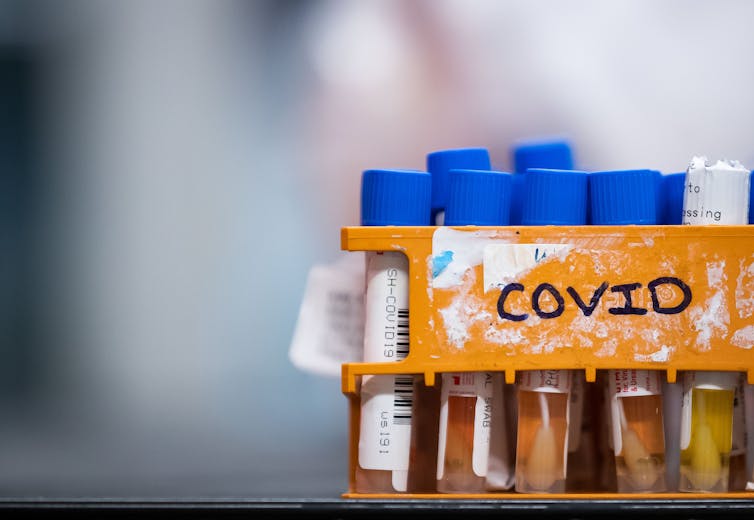
Specimens await testing for COVID-19 at LifeLabs in Surrey, B.C.
Specimens await testing for COVID-19 at LifeLabs in Surrey, B.C. (THE CANADIAN PRESS/Darryl Dyck)
As the coronavirus pandemic continues its spread, it has infected more than half a million people and killed tens of thousands on nearly every continent. With offices shut down, people staying at home and hospitals bracing for an influx of patients, many people are unsure of what’s safe and what’s not. 

Here are answers to some of the common questions people keep asking about coronavirus.

Can people without symptoms spread the virus?

The short answer appears to be yes, some infected individuals who have not shown symptoms can spread the virus and this remains an issue of great concern. This is why social or physical distancing is considered to be so critical to slowing or reducing the transmission of the virus.

Modelling studies in China and Japan, and testing of those on the Diamond Princess cruise ship suggest that a small number of people who are infected do not develop symptoms. We don’t know much about how infectious these asymptomatic individuals might be, that is, how likely they are to spread the disease.

Most studies done to date, often with small numbers of people, show that a person sheds more virus with the initial onset of symptoms — when they first start coughing (or sneezing), which can send the virus into the air in a fine spray. But a recent study in the New England Journal of Medicine documented that some people with no or very mild symptoms can shed significant amount of virus. Children, who may not experience any symptoms or only very mild symptoms, may also be able to spread the infection.

One important caveat here is that symptoms are subjective. One may feel a bit off but give it little attention and not report it to a health-care provider or researcher. So it may be difficult to conclude in these studies that someone recorded as asymptomatic is truly so. Cultural factors may affect how and when people report symptoms or seek care.

How long does the virus stay on surfaces?

Can the coronavirus persist on the mail, produce at the supermarket, gas pumps and so on? A study published in the New England Journal of Medicine suggests the virus can survive for up to two or three days on some surfaces, particularly hard plastics and steel. It is also easier for people to pick up the virus if they touch these surfaces.

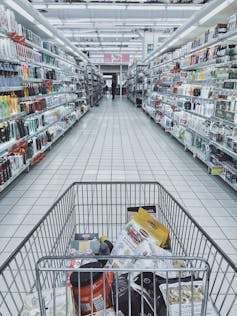
Stay home if you can. But if you use a shopping cart, wipe it down with disinfecting solution and clean your hands afterwards. (Pexels)
The most important issue here is to avoid touching things that many other people have touched recently — elevator buttons, grocery carts, door knobs and hand rails — or to wash one’s hands right away or use an effective hand sanitizing solution such as Purell.

Many grocery stores now provide wash stations and disinfecting solutions for wiping down carts. Use them!

The evidence at hand indicates that the virus degrades rapidly on porous surfaces such as cloth, paper and cardboard. So the risks for infection from handling paper and cardboard (mail and packages) may be low, but the same rules apply — after handling, wash your hands thoroughly.

It is important to remember that the main route of transmission will be directly from one person to another via coughing or sneezing.

Which chemicals kill the virus?

Any soap or detergent will destroy the virus, as will solutions of bleach and water, Clorox disinfectant wipes, Lysol brand cleaners, Purell, etc.

Here’s a full list.

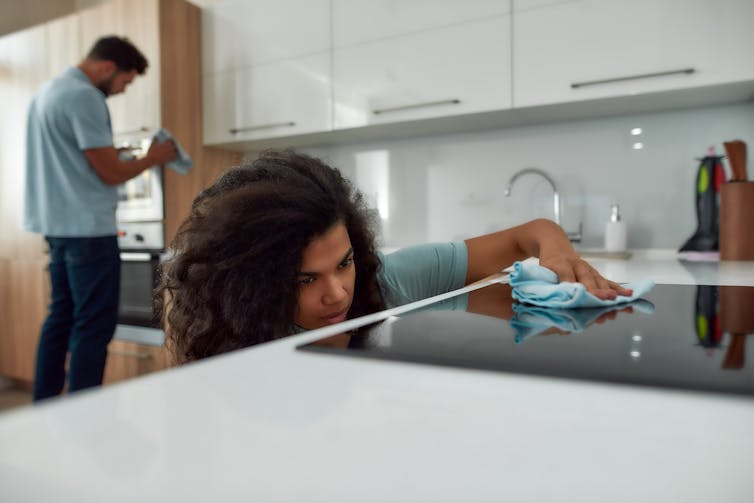
Disinfect surfaces to reduce the spread of coronavirus.
Disinfect surfaces to reduce the spread of coronavirus. (Shutterstock)

What does ‘stay at home’ mean?

Authorities use different terms to describe measures to keep people away from one another to avoid spreading the virus. You may hear “stay at home,” “shelter in place,” “self-isolation” and “quarantine.” All of them involve social or physical distancing to reduce rates of transmission.

Technically speaking, “quarantine” restricts the movement of of people who may have been exposed to the virus but do not have symptoms. The term comes from the plague era in Europe where ships were not allowed to dock for 40 days to demonstrate that their crews were free from the disease. Quarantine is most often used to describe the closure or isolation of geographic locales where a disease is spreading, as was the case in Wuhan, China, although the restrictions are being relaxed.

Perhaps because quarantine may be seen as invoking the coercive powers of the state or stigmatizing those living in affected locales, many public health officials avoid its use.

Canada, for example, focuses mainly on encouraging voluntary measures, distinguishing between “self-monitoring,” where one may have been exposed to the virus (perhaps someone at work felt ill) and is asked to monitor oneself for symptoms, and “self-isolation,” where one has no symptoms, but may have been exposed from travel outside their place of residence or from close contact with someone diagnosed with COVID-19.

Isolation” is for people who actually have the virus or suspect that they may be infected. Those with symptoms will be asked to isolate themselves in their homes, staying away from others as much as possible.

Shelter in place” simply means asking people to stay at home as much as possible. “Stay at home” requests are similar, but may be backed by more formal requirements, such as in Italy, where people may not leave their homes except to go out for essentials, such as food and medicine. Stay-at-home orders are usually accompanied by closures of restaurants, bars, gyms, cancelling of public events, etc., and may be backed by legal sanctions and fines.

Can COVID-19 cause long-term lung damage?

At this early stage of the pandemic there is no evidence to show that permanent or long-term lung damage is a common consequence of infection. A report from Hong Kong suggests short-term declines in lung function among those recovering from COVID-19.

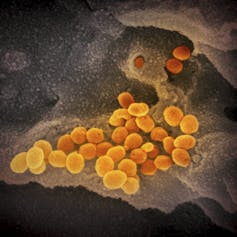
An electron microscope image for the SARS-CoV-2 virus (in orange) emerging from a cell (grey) that had been cultured in the lab.
An electron microscope image for the SARS-CoV-2 virus (in orange) emerging from a cell (grey) that had been cultured in the lab. (NIAID-RML)
A recent report by Dr. Keith Mortman of George Washington University Hospital, circulated widely in the media, provides a graphic description of the extensive damage to the lung caused by COVID-19 in otherwise healthy patients.

However, these reports describe currently ill or newly recovered victims of the disease. It is still too soon to know whether the damage caused by the infection is permanent or long-term.

Can ibuprofen make COVID-19 worse?

This idea circulated on the internet for a few days, proposed initially by the French health minister, and based on some earlier studies of the impact of ibuprofen on respiratory infections. Initially the World Health Organization repeated this warning, but after examining the evidence it reversed its position, declaring that based on documented clinical experiences with patients, there is no evidence that ibuprofen makes the infection worse.

Does blood type matter?

A study of COVID-19 patients in Wuhan and Shenzhen, China who contracted COVID-19 suggested a higher proportion of infections among those who had blood type A. But the differences identified were relatively small and at this point would not have any impact on how we manage either the spread or treatment of the disease. But it is an interesting finding that requires further study.

About Today's Contributor:

Craig Janes, Professor and Director, School of Public Health and Health Systems, University of Waterloo

This article is republished from The Conversation under a Creative Commons license. 

26 March 2020

Toastmasters' 10 Tips for Successful Online Meetings

by
Toastmasters’ 10 Tips for Successful Online Meetings
During this evolving and unprecedented time when personal and professional lives have been disrupted, many people are finding new and innovative ways to stay connected. Whether it's through Zoom, Skype, WebEx or one of the other popular video-conferencing platforms, it's now easier than ever to communicate with people around the globe.

Members of Toastmasters International have been meeting face-to-face for more than 95 years, but due to the coronavirus (COVID-19), most meetings have been temporarily moved online. Many members have found online meetings to be a great way to stay connected, keep momentum going, and provide a much-needed sense of routine in a time when many people's lives are altered, and social distancing is widespread.

To help ensure your meeting is a success, Toastmasters International offers these 10 tips for an efficient and productive online meeting:

  • Select a video-conferencing platform, and do a test run prior to the meeting
  • Meeting organizers should send attendees a copy of the agenda in advance
  • Choose a quiet location before joining the meeting to reduce potential distractions for both yourself and other attendees
  • Arrive on time or let the organizer know ahead of time if you will be late or unable to attend
  • Mute your microphone when not speaking
  • Adjust your camera so you can be seen, and look into the camera—not the monitor—when speaking
  • Dress as you would for an in-person meeting
  • Be aware of your background and make sure it's appropriate
  • Stay focused and avoid checking email or perusing other materials unrelated to the meeting
  • Respect fellow attendees by refraining from distracting behavior like eating or chewing gum

"I have come to love online meetings more than in-person meetings," says Manoj Vasudevan of Singapore, Toastmasters' 2017 World Champion of Public Speaking. "I find online meetings to be more convenient, less expensive, and less disruptive to my schedule. They even allow me to meet more people without leaving home."

25 March 2020

Vinnie Favale's Tribute Video To Italy Goes Viral…In a Good Way [Video Included]

by
Vinnie Favale's Tribute Video To Italy Goes Viral…In a Good Way
Vinnie Favale's Tribute Video To Italy Goes Viral…In a Good Way (screenshot)
When the videos of Italian's singing from their windows went viral last week, Vinnie Favale had a visceral reaction. A first generation American (his parents and two older brothers were born in Italy) Favale was deeply moved by the sight of Italians singing from their hearts in the face of adversity during the nationwide Coronavirus quarantine.
"I was raised on nothing but Italian music during my formative years." said Favale. "Music was a constant in our lives including helping us through some of the most the most heart breaking loses in our family."
Vinnie Favale's Tribute Video To Italy Goes Viral…In a Good Way
Vinnie Favale's Tribute Video To Italy Goes Viral…In a Good Way (screenshot)
With plenty of time on his hands, Favale produced a music video made up of some of the most moving images of Italians at their windows and balconies singing to each other. And he couldn't have picked a better song.
"One of my favorite Italian songs is "L'Italiano (Lasciatemi Cantare)" by Tuto Cutugno which was a big hit in Italy in 1983. I heard this song one day playing on the Italian radio station and fell in love with not only the beautiful melody but also with its sentiment. The singer is not bragging about being Italian, he's just laying out the day to day rituals of the Italian life and he can't help but exclaim, 'hey this is who I am and this is who we are and let me sing my song'."
So, when Favale saw all of the news clips of Italians singing from their windows, he knew he just had to put these two incredible things together.

The Video:

"I hope it will give people a small measure of comfort to see how other people are dealing with exactly what we are going through right now. We have a large family in Italy, including six nieces and nephews and hundreds for cousins. So far everyone is safe, and they are just as concerned for us as they are for themselves."
Vinnie Favale's Tribute Video To Italy Goes Viral…In a Good Way
Vinnie Favale (image via Twitter)

About Vinnie Favale:

(Via vinniefavale.com)
Vinnie Favale is a Producer, Writer, Director, Father and Husband [and not in that order!]. 

He has worked in the entertainment industry since 1979 [NBC, MTV, A&E, HBO, Comedy Central and CBS] and has just set out on his own with Favale Media. 

Click here for more information about Vinnie Favale
SOURCE: Favale Media


You Might Also Like