By Daniel Antonius, University at Buffalo, The State University of New York
On November 13 2015, a series of coordinated attacks in Paris left 130 people dead. A week later, armed gunmen stormed a hotel in Mali, seizing hostages while also firing indiscriminately at guests, killing 27 people. And this week a mass shooting in San Bernardino, California, left 14 dead. While the motive is not known, the FBI has assigned counterterrorism agents to the case, sparking public speculation that the shooting may have been an act of terrorism.
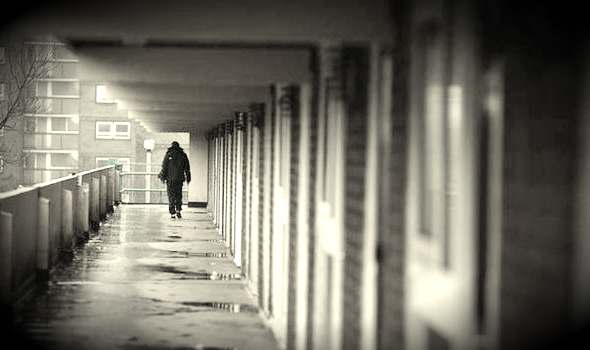
You could spend hours every day watching, reading and listening to news related to these events. This level of exposure can significantly influence your worldviews and how you live your life.
The aftermath of events like these can make people feel more vulnerable. And as cities go on alert because of the threat of future attacks, fear can color our daily routines and world views.
With my colleague S Justin Sinclair at Harvard Medical School, I have been studying the complexity of terrorism fears, and how fear can affect and motivate people.
It is probably not a surprise that a terror attack can have a major impact on people’s mental health. But what sort of effects are common, and how long do they last?
To answer that question, we can turn to a growing body of research examining the psychological aftermath of terror attacks.
6 December 2015
by Loup Dargent
December 06, 2015
![]() |
| A toxic text – but we can learn from it… Adam Jones/flickr, CC BY-SA |
The Institute for Contemporary History in Munich plans to publish an annotated version of Mein Kampf in 2016; the main idea being that a critical edition of the book should be available to counter the anticipated reprint of it by neo-Nazis.
For 70 years, reprinting Mein Kampf has been illegal in Germany. However, the copyright, which is owned by the Bavarian government – and is used to enforce the law – expires this year. From 2016, anyone can reprint it.
5 December 2015
Celebrities, Charities, Miscellaneous, Movies Related, News Related, PRNewswire, TV Series, US Related, Video-clips
by Loup Dargent
December 05, 2015
Los Angeles television's first and longest running entertainment reporter David Sheehan is being honored by the Monaco International Film Festival with its 2015 Lifetime Achievement Award Sunday December 6 in Monte Carlo.
With this year's festival and its Angel Film Awards being a celebration of non-violent movies, the David Sheehan tribute particularly honors his 44 years of campaigning against onscreen violence in his nightly reviews on KNBC-TV and KCBS-TV.
![]() |
| L.A. TV NEWS PIONEER HONORED IN MONTE CARLO (PRNewsFoto/David Sheehan) |
The award is auspicious timing for Sheehan, coming just as the longtime TV broadcaster prepares to launch his "David Sheehan's Hollywood Icons" series of 12 half-hour shows spotlighting his over-the-years interviews with 27 major stars ranging from Johnny Depp and Tom Hanks and Meryl Streep to Tom Cruise and Clint Eastwood and Arnold Schwarzenegger. The series even includes visits during various decades with three stars no longer with us: Robin Williams, Paul Newman and Marlon Brando.
Animals and Pets, Entertainment Related, Environment Related, Miscellaneous, Politically Yours, PRNewswire, Religion Related, Social Networking
by Loup Dargent
December 05, 2015
On Dec. 8, a humanitarian coalition comprised of Paul G. Allen's Vulcan Inc., the Li Ka Shing Foundation and Okeanos, in partnership with The Oceanic Preservation Society and Obscura Digital, and under the auspices of the World Bank Group's Connect4Climate initiative, will present a gift of contemporary public art entitled "Fiat Lux: Illuminating our Common Home" to Pope Francis on the opening day of the Extraordinary Jubilee of Mercy.
Animals and Pets, Christmas Related, Entertainment Related, History Related, Horror Related, Movies Related, Paranormal, Religion Related, The Conversation, Trailers, Video-clips
by Loup Dargent
December 05, 2015
By Natalie Lawrence, University of Cambridge
Two new monster movies are being released in the lead-up to Christmas, and each sports a very different kind of beast. There’s the man-made creation of Victor Frankenstein in the latest rendition of Mary Shelley’s gothic tale, a grotesque creature cobbled together from “the dissecting room and the slaughter-house”. And then there’s Krampus, an American re-working of the evil Austrian counterpart to Father Christmas.
4 December 2015
Books Related, Brexit Related, History Related, Miscellaneous, News Related, Politically Yours, The Conversation, UK Related, Video-clips, Youth Related
by Loup Dargent
December 04, 2015
By Harris Beider, Coventry University
Once upon a time white working-class people were seen as a political problem. Now they are back in fashion – celebrities such as Adele and David Beckham are proud to talk about their working-class roots and politicians are falling over themselves to win their support.Their votes have also been a key battleground in the Oldham by-election.
Political parties and politicians – albeit for different reasons – are keen to win the support of white working-class communities. This is partly the result of the rise of the right-wing UK Independence Party (UKIP) as a political force – despite only having one seat in the House of Commons, the party managed to secure 3.8m votes – and a disproportionate amount of coverage – in the May 2015 general election.
Once upon a time white working-class people were seen as a political problem. Now they are back in fashion – celebrities such as Adele and David Beckham are proud to talk about their working-class roots and politicians are falling over themselves to win their support.Their votes have also been a key battleground in the Oldham by-election.
Political parties and politicians – albeit for different reasons – are keen to win the support of white working-class communities. This is partly the result of the rise of the right-wing UK Independence Party (UKIP) as a political force – despite only having one seat in the House of Commons, the party managed to secure 3.8m votes – and a disproportionate amount of coverage – in the May 2015 general election.
Celebrities, Environment Related, France Related, News Related, Politically Yours, The Conversation, US Related
by Loup Dargent
December 04, 2015
![]() |
| Al Gore lays some facts on the COP21 meeting. Reuters/Jacky Naegelen |
With the main negotiations getting bogged down in such issues as whether to include a 1.5℃ target along with the accepted 2℃ goal (St Lucia and small island states say yes; Saudi Arabia and oil-exporting countries say no), much of the interest is found at the many side events going on at the same time.
One of them was today’s appearance by Al Gore – climate campaigner, former US vice-president, and winner of a Nobel Peace Prize shared with the Intergovernmental Panel on Climate Change.
Celebrities, France Related, History Related, Miscellaneous, Politically Yours, The Conversation, UK Related, US Related
by Loup Dargent
December 04, 2015
![]() |
| Walter Frentz photographed Adolf Hitler strolling with German diplomat Walther Hewel in the Berchtesgaden Alps, near the dictator’s mountain home. ww2gallery/flickr, CC BY-NC |
On March 16, 1941 – with European cities ablaze and Jews being herded into ghettos – The New York Times Magazine featured an illustrated story on Adolf Hitler’s retreat in the Berchtesgaden Alps.
Adopting a neutral tone, correspondent C Brooks Peters noted that historians of the future would do well to look at the importance of “the Führer’s private and personal domain,” where discussions about the war front were interspersed with “strolls with his three sheep dogs along majestic mountain trails.”
For more than 70 years, we have ignored Peters’s call to take Hitler’s domestic spaces seriously. When we think of the stage sets of Hitler’s political power, we are more apt to envision the Nuremberg Rally Grounds than his living room.
Yet it was through the architecture, design and media depictions of his homes that the Nazi regime fostered a myth of the private Hitler as peaceable homebody and good neighbor.
In the years leading up to World War II, this image was used strategically and effectively, both within Germany and abroad, to distance the dictator from his violent and cruel policies. Even after the war began, the favorable impression of the off-duty Führer playing with dogs and children did not immediately fade.
3 December 2015
by Loup Dargent
December 03, 2015
![]() |
| RAF Tornados. Reuters/Russell Cheyne |
The British parliament has approved a government plan to join the international alliance bombing Islamic State targets in Syria. After more than 10 hours debating, the motion in favour of action passed with 397 votes for and 223 votes against the government.
Ahead of the vote, British newspaper columns had been filled with discussion of a new “war”, while those opposed to the airstrikes drew parallels with the catastrophe of the intervention in Iraq in 2003.
Both of these are exaggerations. Britain’s bombing will not be significant and it certainly will not be part of a coherent strategy against the Islamic State, let alone a reasonable approach to Syria’s 56-month conflict.
This is no more than a political sideshow, a diversion from the core issue – namely the continuing civil war between president Bashar al-Assad and his opponents.
Celebrities, Entertainment Related, Miscellaneous, Movies Related, News Related, PRNewswire, US Related
by Loup Dargent
December 03, 2015
Oscar®-nominated filmmaker David O. Russell, whose films have consistently reflected the highest quality of production design, will receive the prestigious Cinematic Imagery Award, from the Art Directors Guild (ADG) at its 20th Annual Art Directors Guild's Excellence in Production Design Awards, presented by DXV from American Standard, it was announced today by ADG Council Chair Marcia Hinds and Awards Producer Thomas Wilkins.
Set for January 31, 2016, the ceremony, at The Beverly Hilton Hotel, hosted by Owen Benjamin, will honor the prestigious spectrum of Russell's extraordinary award-winning work.
Books Related, Entertainment Related, Fantasy Related, Movies Related, Politically Yours, Science Fiction Related, The Conversation, Video Games Related, Youth Related
by Loup Dargent
December 03, 2015
By Tom van Laer, City University London
The Hunger Games novels and films have fascinated me for more than seven years.
And I’m not alone.
The popular books by Suzanne Collins are the most visible example of a genre of stories today’s teens are reading voraciously: young adult dystopian fiction.
Dystopian fiction is set in a world where people lead dehumanized and often fearful lives. Typically, these worlds are environmentally degraded or governed by totalitarian regimes.
My favorite example is George Orwell’s 1984, a hugely ambitious novel that deals with themes of both personal threat and universal oppression. Orwell’s vision is expressed in phrases like Big Brother, doublethink and Thought Police that are now part of everyday speech.
Even though they may have read 1984 as kids, some of today’s parents worry their teens' obsession with dark fiction means they’ll grow up and overthrow the government – like Katniss Everdeen in Hunger Games or Tris Prior in Divergent.
How real is this concern?
The Hunger Games novels and films have fascinated me for more than seven years.
And I’m not alone.
The popular books by Suzanne Collins are the most visible example of a genre of stories today’s teens are reading voraciously: young adult dystopian fiction.
Dystopian fiction is set in a world where people lead dehumanized and often fearful lives. Typically, these worlds are environmentally degraded or governed by totalitarian regimes.
My favorite example is George Orwell’s 1984, a hugely ambitious novel that deals with themes of both personal threat and universal oppression. Orwell’s vision is expressed in phrases like Big Brother, doublethink and Thought Police that are now part of everyday speech.
Even though they may have read 1984 as kids, some of today’s parents worry their teens' obsession with dark fiction means they’ll grow up and overthrow the government – like Katniss Everdeen in Hunger Games or Tris Prior in Divergent.
How real is this concern?
2 December 2015
Entertainment Related, Movies Related, Science Fiction Related, Social Networking, Star Wars Related, UK Related, US Related
by Loup Dargent
December 02, 2015
![]() |
| Star Wars: The Empire Strikes Back at Secret Cinema. © Mike Massaro |
and Helen W. Kennedy, University of Brighton
The soon-to-be-released Star Wars: Episode VII – The Force Awakens is tipped to be the box office success of 2015. Hardly surprising given that fans have been waiting ten years since the last installment.
A lot has changed in how films are produced and promoted in the intervening decade. Last summer, for example, there was a huge Secret Cinema Star Wars event. Their immersive The Empire Strikes Back experience sold a staggering 100,000 tickets, generating over £6 million at the box office.
Running over four months, the event brought to the fore a new form of immersive cinematic entertainment which exploded in the UK over the summer of 2015. In addition to Secret Cinema’s event, the largest season of Open Air Cinema concluded its 125 outdoor screening run. In fact, a dizzying number of organisations now turn cinema into events: in the UK these include Sneaky Experience, Floating Cinema, Sing-alonga, Rooftop Film Club and Nomad Cinema.
Subscribe to:
Comments (Atom)