2 March 2018

McClelland & Stewart Announces the Publication of Richard Wagamese's Final Novel, Starlight

by
Starlight is the final novel from Richard Wagamese, the bestselling and beloved author of Indian Horse and Medicine Walk.
Starlight is the final novel from Richard Wagamese, the bestselling and beloved author of Indian Horse and Medicine Walk. (CNW Group/Penguin Random House Canada Limited)
McClelland & Stewart is honoured to announce the forthcoming publication of a final novel by the late Richard Wagamese, the beloved, bestselling author of Indian Horse and Medicine Walk
This posthumously published novel, entitled Starlight, will be released on August 14, 2018, in hardcover and as an ebook and audiobook. The deal was arranged by John Pearce of Westwood Creative Artists in association with Chris Casuccio, on behalf of Richard Wagamese's Estate.
Set in the B.C. Interior in 1980, Starlight tells the story of an abused woman on the run with her young child—and what happens once they find refuge on a farm owned by an Indigenous man with wounds of his own. Frank Starlight has long settled into a quiet life working his remote farm, but his contemplative existence comes to an abrupt end with the arrival of Emmy, who has committed a desperate act so she and her child can escape a harrowing life of violence. Starlight takes in Emmy and her daughter to help them get back on their feet, and this accidental family eventually grows into a real one. But Emmy's abusive ex isn't content to just let her go. He wants revenge and is determined to hunt her down.
Sadly, Starlight was unfinished at the time of Wagamese's death, yet it is a rapturous and profoundly moving story of love, compassion, mercy, and the consolations to be found in the natural world. There are clear indications of Wagamese's intentions for the remainder of the book, based on the recollections of trusted intimates with whom he periodically shared his ideas about his novel-in-progress. 
The Note on the Text that appears at the end of the book summarizes these ideas and includes a scene that Wagamese intended to adapt for the final scene of Starlight
The book will also include a previously unpublished essay by Wagamese, entitled "Finding Father." The themes and images in this deeply personal essay resonate beautifully with those in the novel, allowing for the larger narrative circle to be closed by Richard Wagamese himself.
McClelland & Stewart Senior Editor Anita Chong said: "When Richard Wagamese died in March 2017, we lost one of our great writers. While it is tragic that Richard did not have the chance to complete what was clearly his masterpiece, what he accomplished in the pages of Starlight is deserving of celebration. And we can't imagine a more fitting tribute to Richard Wagamese, a man who believed in the healing power of story, than to share his majestic last novel with readers."
Canadian novelist, Richard Wagamese
Celebrated Canadian novelist, Richard Wagamese (CNW Group/Penguin Random House Canada Limited)
Richard Wagamese was one of Canada's foremost writers. 

His celebrated, bestselling novels included Keeper'n MeIndian Horse, which was a Canada Reads finalist, winner of the inaugural Burt Award for First Nations, MĆ©tis and Inuit Literature, and made into a feature film; and Medicine Walk
He was also the author of acclaimed memoirs, including For JoshuaOne Native Life; and One StoryOne Song, which won the George Ryga Award for Social Awareness in Literature; as well as a collection of personal reflections, Embers, which received the Bill Duthie Booksellers' Choice Award. 
He won numerous awards and recognition for his writing, including the National Aboriginal Achievement Award for Media and Communications, the Molson Prize for the Arts, the Canada Reads People's Choice Award, and the Writers' Trust of Canada's Matt Cohen Award. 
Wagamese died on March 10, 2017, in Kamloops, B.C.

SOURCE: Penguin Random House Canada Limited
1 March 2018

Men's Liberation: What Today's #MeToo Sceptics Can Learn From Their 1970s Brothers

by

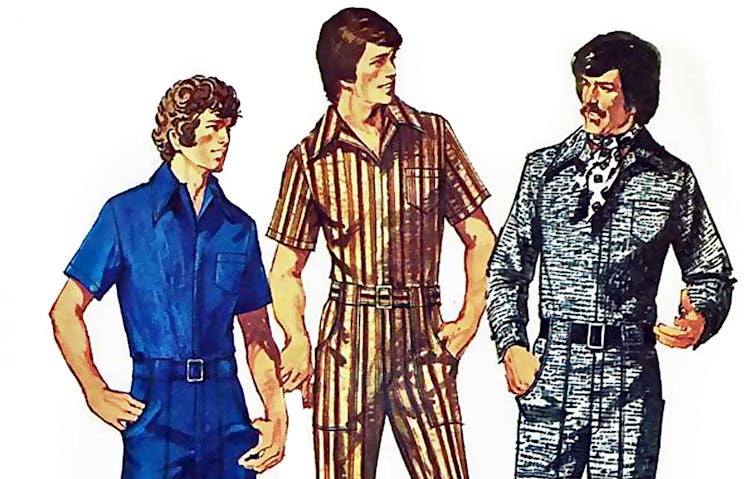
70s men
James Vaughan, CC BY-NC-SA
The ubiquity of sexism and sexual abuse is finally becoming part of the mainstream conversation about patriarchal culture as a result of #MeToo and the Harvey Weinstein scandal. Male privilege has been so tightly laced into the fabric of daily life for so long that many people – men and women alike – have developed a blind spot for it.

Responses among men to the recent outpouring of accusations have been mixed. Some have declared their support for the women (and, occasionally, men). Others feel victimised. Of course, the desired outcome of all this is not to break men’s spirits through endless criticism, but to acknowledge that they can play a vital role in establishing a new consensus. If men don’t do their share of the work, then equality will only ever be a distant dream.

This discussion has a history – one that reveals an achingly slow pace of change. Its origins lie in the 1970s, when small groups of progressively minded men began to look beyond the reductive gender roles that they had been conditioned into.

The 1970s was a transitional decade, when critiques of sexism became progressively louder and confrontational. And yet, the persistent unwillingness of mainstream culture to acknowledge male vulnerability showed how profoundly ill at ease society still was with these sorts of changes. It was the straitjacket definition of masculinity that the “men’s liberation” movement (not to be confused with the more recent, reactionary “men’s rights” movement) wanted to challenge.

Although hardly mainstream, writers such as Andrew Tolson, Jack Nichols and Arthur Brittain formed part of a loose network of men in Britain and America who sought to respond positively to second-wave feminism.

They were committed to freeing men (and the women who had to live with them) from narrow definitions of masculinity that left little space for emotions other than anger. Through books, workshops and underground magazines such as Achilles Heel, these writers and activists adopted the language and aims of the women’s movement. Part gender theory, part advice literature, the work they produced was a gentle call to arms.

Masculinist mystique
In his 1975 book Men’s Liberation: A New Definition of Masculinity, American writer Nichols criticised the myths that constructed men as naturally dominant, aggressive and emotionally detached. Using the phrase “masculinist mystique”,’ Nichols consciously echoed the American feminist Betty Friedan who, in 1963, had coined the term “feminine mystique” to describe the deep sense of emptiness that could afflict suburban housewives.

The inflated aggression and chauvinism that men were encouraged to cultivate, Nichols asserted, put up barriers between them. It was a force keeping them in an endless cycle of competition and one-upmanship. In fostering a sense of community amongst progressively minded men, Nichols attempted to break down the barriers that prevented them from being emotionally honest, vulnerable and authentic with each other.

They’ve been doing their reading
They’ve been doing their reading. samantha sophia unsplash

Similarly, in his books and workshops, British writer Tolson explored the seemingly invisible structures that reinforced men’s often negative sense of entitlement. The front that many men projected, he believed, was often profoundly at odds with their real feelings. This undermined their mental health and ability to connect with others. Tolson’s main interest was the way that social settings shaped and reinforced toxic masculinity. A man might “cultivate, even fabricate his masculine presence,” through stories exaggerating his romantic and economic prowess. By presenting a version of masculinity to the world which was “increasingly under attack” from feminist and gay rights campaigners, he maintained, men were falling prey to self-limiting behaviour.

Tolson encouraged men to become comfortable expressing their emotions and talking honestly about themselves. In his discussion groups, men talked about relationships, body image and their attitudes to women. Tolson urged them to curb their desire to dominate in relationships, which the 70s fashion for promiscuity, polygamy and communal living didn’t do enough to challenge. In fact, even in potentially progressive relationship set-ups, men could hold on to old attitudes:
To be inside a … couple, however open … is to be part of a mutual negotiation. And one of the more insidious tendencies of the middle-class male is a liberalism which conceals, but in the end reproduces, his traditional power.
The ConversationThis is the reality that we are now having to confront, more than 40 years on, as we try to understand how so many apparently liberal men can abuse their power with such impunity. Tolson’s point that deeply buried male privilege can conceal itself within an otherwise spotless set of progressive values is one we are still grappling with. The brief flowering of men’s liberation may not have achieved much mainstream success, but it was a meaningful moment of cooperation in a decade fraught with factionalism. In an era that celebrated Miss World as mainstream family entertainment, recognising that men could overcome their conditioning to become human beings was a good place to start.

About Today's Contributor:
Emily Priscott, Doctoral Researcher in Contemporary British History, University of Sussex

This article was originally published on The Conversation

The Maker of Brawny Launches "Who's Your 'Shero?'" Campaign and Asks People to Post Stories of Strong and Courageous Women

by
#StrengthHasNoGender - Who's Your 'Shero?
#StrengthHasNoGender - Who's Your 'Shero?
Sheroes are everywhere among us, they just don't always get the attention they deserve. In recognition of Women's History Month, Georgia-Pacific's Brawny paper towels brand is asking "Who's your Shero?," encouraging people to share an inspiring story on social media about a female hero who exhibits strength and resilience with the courage to help others—because there isn't a shortage of sheroes, only a shortage of their stories.
As part of the third year of its #StrengthHasNoGender campaign, Brawny will support the initiative with original content and a partnership with the nonprofit organization, Girls Inc. Brawny will also commemorate the campaign by releasing limited-edition product featuring a replacement of the Brawny Man with three different women on Brawny packages at retailers nationwide during Women's History Month.
Throughout March, Brawny will curate shero stories shared on social media using the hashtag #StrengthHasNoGender in celebration of females who inspire, who demonstrate courage and selflessness, and who have broken barriers and shattered stereotypes. The brand is also asking people to tag friends to do the same. Additionally, with the help of more than a dozen female comic artists and animators, shero stories will be brought to life through illustrations on Brawny digital channels.
Reinforcing the sheroic theme of this year's campaign, the Brawny brand has created a series of short, original films featuring the stories of three inspiring sheroes, available at Brawny.com/StrengthHasNoGender.

The three women featured in the films include:
  • Vanessa Casillas – a bricklayer, a Chicago Women in the Trades (CWIT) graduate in the top of her class and a CWIT Board of Directors member who overcame harassment and sexism in a male-dominated field
  • Sarah Herron – Business owner that empowers girls with physical differences to build confidence and self-acceptance through outdoor adventure sports. She was also the first contestant from ABC's The Bachelor with a physical disability.
  • Rachael Wilson – a Marine Corps veteran discharged after a knee injury, with a background in equine assisted therapy, who helps her fellow veterans heal from trauma and overcome internal struggles post-service
"The goal of the Brawny #StrengthHasNoGender campaign is to promote female empowerment in ways that will surprise, inspire, and move you," said Nicole Cook, Brand Building Leader at Georgia-Pacific. "There are countless numbers of shero stories that need to be told, and we want to provide the platforms to recognize these women who deserve the spotlight."
The Brawny brand continues to partner with Girls Inc. and will contribute $100,000 in support of its many different programs which inspire young girls to carry out the organization's mission of being strong, smart, and bold.
"We are proud to work with Girls Inc. again this year to provide support for their programs and extend the reach of the organization's positive impact on young girls' potential," added Cook.
The #StrengthHasNoGender initiative is an extension of the Brawny Stay Giant campaign, which encourages and honors Americans who face adversity with strength and resilience. 

SOURCE: Georgia-Pacific

The Videos:


The Economist: Autonomous Vehicles Will Change The World The Future Will Be About Selling Rides, Not Cars

by
Autonomous vehicle
AV success depends on whether policymakers can learn the lessons of the horseless carriage and apply them to the driverless car
Autonomous vehicles are expected to develop and spread quickly in the coming years. Some are already on the road. This report considers the implications of fully self-driving cars for personal mobility, car ownership and the future of transport, on the assumption that the remaining technological hurdles will be overcome. It also looks more broadly at the wider economic, social and cultural effects of AVs.
The author of "Reinventing wheels," a special report published in today's edition of The Economist, is Tom Standage, the newspaper's deputy editor and head of digital strategy. He notes that AVs are not yet ready to operate entirely without human supervision, but have made rapid progress in recent years. Tech giants (notably Google's sister company Waymo), startups, carmakers and academic researchers are all working on AVs or developing related technology, including laser scanning, computer vision and machine learning. Waymo expects to launch a driverless "robotaxi" service this year, serving a limited part of the city of Phoenix, Arizona; GM, America's biggest carmaker, hopes to follow suit next year.
Because AVs sit at the intersection of the technology and automotive industries, a furious battle is under way to dominate this emerging industry. The result has been a flurry of deals and alliances between carmakers, software and hardware companies and ride-hailing firms. The report predicts that at least initially, and possibly even in the long term, a large proportion of self-driving cars will be taxis of some sort. The future will be about selling rides, not cars.

"Reinventing wheels" examines four main themes:
  • Technology: AV technology is making rapid progress but still needs further work for a wide rollout. A fully autonomous car needs to master three tasks: perceiving its environment, predicting the actions of those around it and responding accordingly. The first two of these tasks pose the greatest technical challenges.
  • Impact on industry: carmakers, tech companies and ride-hailing firms are all competing and often co-operating in this new field. AVs could undermine the case for car ownership, but there is a big opportunity for carmakers to reinvent themselves as mobility providers, selling miles rather than metal boxes.
  • Urban planning: AVs present an opportunity to rethink cities. They could reduce traffic and reduce transport costs. But whether they increase urban density or encourage sprawl will depend on planners' and policymakers' choices.
  • Society: AVs could greatly reduce crashes, emissions and congestion, but could also have unintended consequences. By recording riders' every move, they raise privacy concerns. And uneven provision could cause new forms of segregation.
A century ago the advent of the car brought more personal autonomy, freedom of choice and mobility, but at the cost of pollution, congestion and road deaths. Autonomous vehicles will prove similarly revolutionary. AVs offer policymakers an extraordinarily flexible tool with which to shape urban and transport environments—but that also means that they offer authoritarian governments a powerful means of social control. Whether they are a success will depend on whether policymakers can learn the lessons of the horseless carriage and apply them to the driverless car.

SOURCE: The Economist

26 February 2018

Investigating The Unsolved Murders of Tupac and The Notorious B.I.G. in True Crimes TV Series

by
Actor Josh Duhamel stars in "Unsolved: The Murders of Tupac and The Notorious B.I.G."
Actor Josh Duhamel stars in "Unsolved: The Murders of Tupac and The Notorious B.I.G." premiering on Feb. 27, 2018 at 10 p.m. (EST) on the USA Network. (CNW Group/Core Magazines
Who shot Biggie and Tupac? 

This question has been asked again and again over the years since the world lost two of its most legendary yet controversial musicians. Despite many conspiracy theories and high-profile investigations into their deaths their murders remain unsolved after decades. Will we finally get some answers?
Unsolved: The Murders of Tupac and The Notorious B.I.G. is a scripted, true-crime series which chronicles the investigation of real-life detectives Greg Kading (played by Josh Duhamel) and Russell Poole (Jimmi Simpson) into the murders of two of the rap industry's most legendary players. 

The role of Tupac Shakur is played by newcomer Marcc Rose and The Notorious B.I.G. (Christopher Wallace, a.k.a. Biggie Smalls) by Wavyy Jonez.
The 10-episode TV series explores the complicated friendship between Biggie and Tupac in the 1990s, the era that the East Coast v. West Coast rivalry in the rap music industry was said to be at its greatest divide. The series delves into the culture that defined the two artists, was defined by them, and was forever changed in the wake of their untimely deaths.
Emmy-award winning producer Anthony Hemingway (The People v. O.J. Simpson: American Crime Story, Red Tails, Underground) is the director and executive producer of the Unsolved series about Tupac and Biggie with Mark Taylor through their Hemingway | Taylor production company. Kyle Long (Suits) wrote the pilot and is an executive producer on the show. Former LAPD detective Kading, from the 2006 case and author of the book Murder Rap: The Untold Story of Biggie Smalls & Tupac Shakur Murder Investigations also serves as co-executive producer on this limited series from Universal Cable Productions. Lyah Beth LeFlore is a co-producer and music supervisor.
There have been many investigations over the years, to figure out what happened in those two cases and as to how and if they're connected. Another question that people always seem to ask is, How can a case this famous, with personalities so prominent still be unsolved? Hopefully this series will give us some clear answers.
⏩ Unsolved: The Murders of Tupac and The Notorious B.I.G. - part one of 10 starts on Feb. 27, 2018 at 10 p.m. (EST) on the USA Network

The Trailer:

The actors who play Biggie, Tupac and the detectives who try to solve their murders:
Marcc Rose and  Wavyy Jonez as Tupac Shakur and The Notorious  B.I.G.  in  the   TV crime-drama series "Unsolved: The Murders of Tupac and The Notorious B.I.G.,"
"Unsolved: The Murders of Tupac and The Notorious B.I.G." premiers Feb. 27, 2018 at 10 p.m. (EST) on the USA Network (CNW Group/Core Magazines)
⏩ Marcc Rose will star in his second role in Unsolved. His other role was also as Shakur, in Straight Outta Compton, his debut acting role. I suppose they chose him for the part not only for his acting ability but also because of the uncanny resemblance to Shakur. It will certainly add to Rose's believability in the role.
Here is something about him you may not know. Before Rose got into the industry he was in the fashion business as creator and designer of the urban clothing line called Controversial Treatment.
⏩ Wavyy Jonez is the mirror image of Wallace (Biggie), a Brooklyn honour student who became a small-time drug dealer before becoming known as the face of East Coast rap. He was shot and killed in Los Angeles six months after Shakur.
This is Jonez's very first acting role. He was discovered among thousands of hopefuls who auditioned in a nationwide open casting call for the role of Notorious B.I.G. in Unsolved. His video audition captured the attention of casting directors and the show's director, Anthony Hemingway. Jonez is a rapper with a metaphorical style reminiscent of New York artists of the 1990s. His first mixtape was called R.E.D. D.O.P.E. (Real Everyday Drama Doing Over People's Expectation).
⏩ Josh Duhamel plays Det. Greg Kading, who headed a multi-agency task-force to find out who was responsible for Wallace's murder.
Duhamel has had numerous roles in film and television, appearing in Transformers: Dark of the MoonLasse Hallstrom's Safe HavenGeorge C. Wolfe's You're Not You and Garry Marshall's New Year's Eve opposite Hilary Swank and Emmy Rossum; as well as Life as We Know It with Katherine Heigl, When in RomeLost in the SunBravetown, and The Romantics. Known for playing Danny McCoy on the NBC crime drama Las Vegashe recently appeared in 11.22.63, Misconduct, and Spaceman. Duhamel is a three-time Emmy-nominated actor for his role on the soap opera All My Children.
⏩ Officer Daryn Dupree was a key member of Kading's task force and someone who had extensive knowledge of both Los Angeles gangs and the rap industry. Dupree is played by Harlem-native Bokeem Woodbine (RayLifeDevilThe Host, and Riddick).
Woodbine's first role was a lead in Forrest Whitaker's directorial debut, Strapped. Since then he has appeared in films of all genres. He recently appeared in Underground, directed by Hemingway, and in Spider-Man: Homecoming. His credits on television include Saving Grace and The Billionaire Boys Club. Most recently, he starred in the Emmy- and Golden Globe-winning series Fargo, in which he was nominated for an Emmy for his role as Mike Milligan.
⏩ Russell Poole investigated Notorious B.I.G.'s murder in 1997. He became convinced that the LAPD was covering up something. His findings eventually led Biggie's mother Voletta Wallace to file a massive lawsuit against the city. She used the $400 million she received from the claim to help open a second investigation into her son's death.
Poole is played by Jimmi Simpson (Westworld, House of Cards), a SAG Award-nominated actor. Simpson (Herbie: Fully LoadedWhite House Down) who made his feature film debut in the teen comedy Loser, directed by Amy Heckerling, has acted in Under the Silver Lake and an upcoming Errol Morris miniseries. 

He has also appeared in multiple series such as Hap and LeonardThe NewsroomIt's Always Sunny in PhiladelphiaUSA Network's Psych and NBC's This Is Us.
⏩ These actors have joined the cast; Jamie McShane (Bloodline) as Det. Fred MillerBrent Sexton (The Killing) as Det. Brian TyndallLuke James (Black Nativity) as Sean "Puffy" Combs, Aisha Hinds(Underground) as Biggie's mother Voletta Wallace, and Letoya Luckett (Rosewood) as Suge Knight'sestranged wife Sharitha Golden.

by Cherryl Bird – Toronto, Ontario, Canada
Twitter @ladycbird | Instagram @cherrylbird

24 February 2018

'Best F(r)iends' Tommy Wiseau and Greg Sestero Reunite On Screen This Spring for the First Time Since 'The Room'

by
"Best F(r)iends" - starring cult-movie heroes Tommy Wiseau and Greg Sestero ("The Room")
“When we unveiled the ‘Best F(r)iends’ trailer at our cinema screenings of ‘Tommy Wiseau’s The Room’ in January, fan response was overwhelming,” said Fathom Events VP of Programming 
"Best F(r)iends," starring cult-movie heroes Tommy Wiseau and Greg Sestero ("The Room"), debuts in movie theaters nationwide this spring. The new Wiseau-Sestero dark comedy thriller is written by Sestero, the New York Times best-selling author of "The Disaster Artist," which was adapted into an Oscar nominated Hollywood film. 

Inspired by a road trip made by Sestero and Wiseau after the production of "The Room" in April 2003, "Best F(r)iends" will be released in two volumes, for two nights each. "Best F(r)iends" comes to cinemas nationwide on Friday, March 30 and Monday, April 2, with "Best F(r)iends: Volume Two" following on Friday, June 1 and Monday, June 4, all at 8:00 p.m. local time. 

In addition to viewing the feature content, attendees will also see exclusive behind-the-scenes footage and outtakes.
"Best F(r)iends" - starring cult-movie heroes Tommy Wiseau and Greg Sestero ("The Room")
Tommy Wiseau and Greg Sestero (via FathomEvents.com)
⏩ Tickets for "Best F(r)iends" can be purchased online by visiting FathomEvents.com or at participating theater box offices. Fans throughout the U.S. will be able to enjoy the event in nearly 600 select movie theaters. 

A complete list of theater locations is available on the Fathom Events website (theaters and participants are subject to change).
"Best F(r)iends" - starring cult-movie heroes Tommy Wiseau and Greg Sestero ("The Room")
Tommy Wiseau and Greg Sestero (via FathomEvents.com)
When a drifter (Sestero) is taken in by a peculiar mortician (Wiseau), the two hatch an underground enterprise off the back of the mortician's old habits. But greed, hatred and jealousy soon come in turn, and their efforts unravel, causing the drifter to run off with the spoils and leaving the mortician adrift. An expedition across the Southwest introduces wild and crazy characters through a series of twisted and dark foibles as both men learn a valuable lesson about friendship and loyalty.
"When we unveiled the 'Best F(r)iends' trailer at our cinema screenings of 'Tommy Wiseau's The Room' in January, fan response was overwhelming," said Fathom Events VP of Programming Kymberli Frueh. "This spring, we are excited to bring this reunion of friends to fans of Wiseau and 'The Room' everywhere."
"Best F(r)iends" - starring cult-movie heroes Tommy Wiseau and Greg Sestero ("The Room")
Tommy Wiseau and Greg Sestero (via FathomEvents.com)
"Best F(r)iends" also stars Paul Scheer ("the League," "Human Giant," "Veep") and features a musical score created by Daniel Platzman of Imagine Dragons.

SOURCE: Fathom Events
The Trailer:

23 February 2018

"It's the Guns," Says Mental Health Partnerships

by
Donald Trump got at least $21 million from the gun lobby.
Donald Trump got at least $21 million from the gun lobby. (via Metro
"Mental Health Partnerships (MHP), a multi-faceted mental health advocacy and service agency, joins with all Americans in mourning the 17 lives lost at Marjory Stoneman Douglas High School in Parkland, Florida—and we demand that our legislators take immediate action to prevent such tragedies," says MHP President and CEO Michael Brody.
"We are talking about gun safety. After a mass shooting in Australia in 1996, the country enacted strict gun laws—and it has not had a mass shooting since. 'In the developed world, these levels of gun violence are a uniquely American problem.'

Even within the U.S., the research is clear: According to an American Public Health Association study, 'states with higher rates of gun ownership had disproportionately large numbers of deaths from firearm-related homicides.' As economist Richard Florida wrote, 'fatal gun violence is less likely to occur in richer states with more post-industrial knowledge economies, higher levels of college graduates, and tighter gun laws. Factors like drug use, stress levels, and mental illness are much less significant than might be assumed (emphasis added).'

Many of us at Mental Health Partnerships have been diagnosed with serious mental health conditions, and we are concerned about the linking of such conditions with a propensity for violence, because it increases prejudice and discrimination. As a writer on the Behavioral Scientist website noted in October: 'Perpetuating the myth that mental illness is the cause of mass shootings only serves to stigmatize the mentally ill even further. In addition, it distracts from the more difficult conversation that must be had over gun-control in America.'

Unfortunately, many of our legislators are in thrall to the National Rifle Association. Republicans received nearly $6 million in the 2016 election cycle; Democrats received $106,000. (How much does your legislator receive? Here's the list. And President Trump? He got at least $21 million from the gun lobby.) But who are they representing? Ninety percent of Americans support background checks for all gun sales.

As to the Second Amendment (which, in fact, covers militias, not personal gun ownership), common sense begs the question 'Guns have changed. Shouldn't our gun laws?'"


22 February 2018

National Women's Group Calls on The Everglades Foundation to Remove Paul Tudor Jones from their Board and Forfeit Donations

by
Paul Tudor Jones
Paul Tudor Jones (image via Forbes)
The New York Attorney General's lawsuit against Harvey Weinstein further implicates Weinstein Company Board Members for creating a culture of sexual harassment and victimization of women.
The National women's group, Women United Now, is calling on The Everglades Foundation to remove Paul Tudor Jones, a long time personal friend of Harvey Weinstein and Weinstein Company board member, from their board and to give the $3,518,167 that Paul Tudor Jones donated to the Foundation in 2015 and 2016 to a fund for the victims of Harvey Weinstein.
In addition, they are calling on billionaire Paul Tudor Jones to give $100 Million to the same fund, as part of Women United's national campaign to hold Harvey Weinstein's billionaire board members accountable.
"It's time we shine light on not just predators like Weinstein, but also on the enablers like Paul Tudor Jones. By bringing these enablers to justice we can change the culture for all women. It starts with groups like The Everglades Foundation taking actions now to show they support the victims and notPaul Tudor Jones," stated Catrena Carter, Founder of Women United Now.
Just this week, Eric T. Schneiderman, Attorney General of the State of New York, filed suit to stop the sale of The Weinstein Company. The suit stated:
The Attorney General brings this action to remedy a years-long gender-based hostile work environment, a pattern of quid pro quo sexual harassment, and routine misuse of corporate resources for unlawful ends that extended from in or about 2005 through at least in or aboutOctober 2017.

The company's management and board of directors were repeatedly presented with credible evidence of HW's sexual harassment of TWC employees and interns, and his use of corporate employees and resources to facilitate sexual activity with third parties, amidst allegations that HW had engaged in unlawful sexual conduct.  (Document Attached).
Mr. Schneiderman also stated:
"Any sale of the Weinstein Company must ensure that victims will be compensated, employees will be protected going forward, and that neither perpetrators nor enablers will be unjustly enriched," (New York Times).
The Harvey Weinstein scandal arose in October 2017, when over 100 women came forward with claims of sexual assault and abuse against Weinstein. These allegations date as far back as the 1970s. Paul Tudor Jones maintained a direct relationship to Harvey Weinstein- both as a board member and as a personal friend, continuing to support Weinstein even after the allegations against him had become public. In October 2017Paul Tudor Jones emailed his friend, proclaiming, "I love you," and telling Weinstein that "everyone would soon forget about the allegations."
Paul Tudor Jones has shown a pattern that is discriminatory towards women. In 2013, when asked at a UVA function why industrial trading was mostly men, he said that when women have children, it becomes a "focus killer." Specifically, Jones told an audience of University of Virginia students, alumni and others that it is difficult for mothers to be successful traders because connecting with a child is a focus "killer."
"As soon as that baby's lips touched that girl's bosom, forget it," Jones said, motioning to his chest. In the video of the event, Jones says, "every single investment idea . . . every desire to understand what is going to make this go up or go down is going to be overwhelmed by the most beautiful experience . . . which a man will never share." As the video goes on, he says, "You will never see as many great women investors or traders as men — period, end of story."
Carter is a 30-year veteran of both the civil rights and women's movements and has led successful, grassroots efforts around the country by getting women involved in the political process, most recently the "Vote or Die" movement that defeated accused sexual predator, Roy Moore.
Women United Now is a next phase of the #MeToo movement. As their message states, now it's time to #DemandRespect. In addition to releasing ads, the group will also be launching a grassroots effort to shine a light on the structure of powerful and successful men that allow abuse to go unchecked and unreported.
"Until these men are exposed, the culture of tolerating assaults on women will continue," said Carter.
Earlier this week, Women United Now announced they had collected more than 5,000 petitions at the University of Virginia, calling on the University to remove the Jones name from the Basketball Arena. The University of Pennsylvania removed the Wynn name from its building for similar actions by Steve Wynn.
Carter, along with volunteers, will continue petitioning UVA throughout the month to have the Jones name removed from all UVA buildings.

SOURCE: Women United Now

20 February 2018

David Yurman Joins Executive Producing Team For 'Gender In Hollywood' (Working Title)

by
Sybil and David Yurman
David Yurman is joining executive producer and Academy Award- winning actor and advocate Geena Davis in the upcoming feature-length documentary 'Gender In Hollywood' (working title). 
⏩ The film examines Hollywood's gender bias through first-hand accounts from some of Hollywood's leading industry professionals both in front of and behind the camera, shining a spotlight on the broader effects of bias on consumers of entertainment around the globe.
"David Yurman is committed to helping raise awareness about the need for gender parity, and is honored to be a part of the documentary, which is a powerful platform to spread this message," said David Yurman. "It is a natural fit."
The David Yurman brand has long been a proponent of female empowerment. 75 percent of the David Yurman executive committee are women, and the company is almost 70 percent female.
"We are a company of women, led by women and co-founded by a woman," said Sybil Yurman, co-founder David Yurman. "Since 1980 we have strived to elevate and celebrate women throughout all levels of the company."
Through the candid testimony of high-profile actors, directors and studio executives, the film connects the dots between the disparity onscreen and the lack of opportunity women face behind the scenes, telling the story of systemic discrimination throughout Hollywood's history.
Interviewees include Geena Davis, Shonda Rhimes, Jessica ChastainZoe SaldanaJudd ApatowYara ShahidiPaul FeigChloe Grace MoretzGillian AndersonJackie CruzSharon StoneAlan Alda, and Lena Dunham.
Cutting-edge data from The Geena Davis Institute on Gender in Media is used to support the narrative of the film. The institute is the only research-based organization working behind the scenes in the media and entertainment industry to influence the need to dramatically improve gender balance, reduce stereotyping and create diverse female characters in entertainment targeting children.
"Unconscious gender bias directly correlates to the way women are represented on screen," said Geena Davis. "When we look at how this documentary will add to the discussion about gender inequality, we hope one of the key takeaways is that a solution is only possible if both women and men in this industry work together to create change."
Ku-Ling Yurman
Ku-Ling Yurman
Ku-Ling Yurman, independent filmmaker and daughter-in-law of David and Sybil, will act as an executive producer on the film. An alum of the American Film Institute, Ku-Ling has taken on many roles in the television/film industry.
"I first experienced institutionalized inequality when I was in film school, and quickly realized it spans all industries," said Ku-Ling Yurman. "Our objective with this documentary is to bring about actual change. We have a collective responsibility to take ownership of this issue and activate a higher standard for gender equality."
The film is directed by Tom Donahue (Casting By, Thank You for Your Service) and produced by CreativeChaos vmg and New Plot Films in association with the Geena Davis Institute on Gender in Media and Artemis Rising Foundation. Filming began in 2016.
In addition to Geena Davis and Ku-Ling YurmanRegina K. ScullyMadeline Di NonnoSteve EdwardsPatty Casby, and Jennie Peters are executive producers on the film. Ilan Arboleda and Kerianne Flynn are set to produce.
"Since we started the film a year and a half ago, we have conducted more than 100 interviews with some of the leading voices on the issue both inside and outside of Hollywood. Their candid testimony has not only detailed the systemic roadblocks that women face as storytellers and artists in Hollywood, but also has illuminated possible pathways toward lasting parity, "said director Tom Donahue.

SOURCE: David Yurman

You Might Also Like