On Dec. 8, a humanitarian coalition comprised of Paul G. Allen's Vulcan Inc., the Li Ka Shing Foundation and Okeanos, in partnership with The Oceanic Preservation Society and Obscura Digital, and under the auspices of the World Bank Group's Connect4Climate initiative, will present a gift of contemporary public art entitled "Fiat Lux: Illuminating our Common Home" to Pope Francis on the opening day of the Extraordinary Jubilee of Mercy.
5 December 2015
Animals and Pets, Christmas Related, Entertainment Related, History Related, Horror Related, Movies Related, Paranormal, Religion Related, The Conversation, Trailers, Video-clips
by Loup Dargent
December 05, 2015
By Natalie Lawrence, University of Cambridge
Two new monster movies are being released in the lead-up to Christmas, and each sports a very different kind of beast. There’s the man-made creation of Victor Frankenstein in the latest rendition of Mary Shelley’s gothic tale, a grotesque creature cobbled together from “the dissecting room and the slaughter-house”. And then there’s Krampus, an American re-working of the evil Austrian counterpart to Father Christmas.
4 December 2015
Books Related, Brexit Related, History Related, Miscellaneous, News Related, Politically Yours, The Conversation, UK Related, Video-clips, Youth Related
by Loup Dargent
December 04, 2015
By Harris Beider, Coventry University
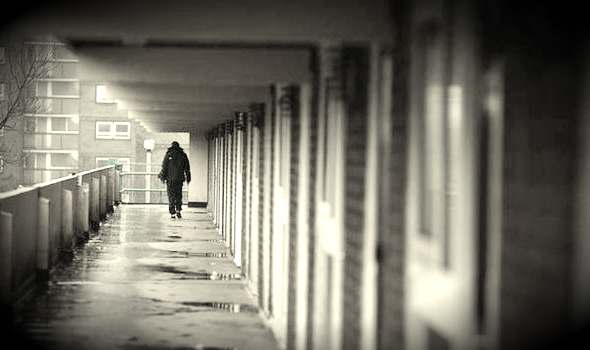
Once upon a time white working-class people were seen as a political problem. Now they are back in fashion – celebrities such as Adele and David Beckham are proud to talk about their working-class roots and politicians are falling over themselves to win their support.Their votes have also been a key battleground in the Oldham by-election.
Political parties and politicians – albeit for different reasons – are keen to win the support of white working-class communities. This is partly the result of the rise of the right-wing UK Independence Party (UKIP) as a political force – despite only having one seat in the House of Commons, the party managed to secure 3.8m votes – and a disproportionate amount of coverage – in the May 2015 general election.
Once upon a time white working-class people were seen as a political problem. Now they are back in fashion – celebrities such as Adele and David Beckham are proud to talk about their working-class roots and politicians are falling over themselves to win their support.Their votes have also been a key battleground in the Oldham by-election.
Political parties and politicians – albeit for different reasons – are keen to win the support of white working-class communities. This is partly the result of the rise of the right-wing UK Independence Party (UKIP) as a political force – despite only having one seat in the House of Commons, the party managed to secure 3.8m votes – and a disproportionate amount of coverage – in the May 2015 general election.
Celebrities, Environment Related, France Related, News Related, Politically Yours, The Conversation, US Related
by Loup Dargent
December 04, 2015
![]() |
| Al Gore lays some facts on the COP21 meeting. Reuters/Jacky Naegelen |
With the main negotiations getting bogged down in such issues as whether to include a 1.5℃ target along with the accepted 2℃ goal (St Lucia and small island states say yes; Saudi Arabia and oil-exporting countries say no), much of the interest is found at the many side events going on at the same time.
One of them was today’s appearance by Al Gore – climate campaigner, former US vice-president, and winner of a Nobel Peace Prize shared with the Intergovernmental Panel on Climate Change.
Celebrities, France Related, History Related, Miscellaneous, Politically Yours, The Conversation, UK Related, US Related
by Loup Dargent
December 04, 2015
![]() |
| Walter Frentz photographed Adolf Hitler strolling with German diplomat Walther Hewel in the Berchtesgaden Alps, near the dictator’s mountain home. ww2gallery/flickr, CC BY-NC |
On March 16, 1941 – with European cities ablaze and Jews being herded into ghettos – The New York Times Magazine featured an illustrated story on Adolf Hitler’s retreat in the Berchtesgaden Alps.
Adopting a neutral tone, correspondent C Brooks Peters noted that historians of the future would do well to look at the importance of “the Führer’s private and personal domain,” where discussions about the war front were interspersed with “strolls with his three sheep dogs along majestic mountain trails.”
For more than 70 years, we have ignored Peters’s call to take Hitler’s domestic spaces seriously. When we think of the stage sets of Hitler’s political power, we are more apt to envision the Nuremberg Rally Grounds than his living room.
Yet it was through the architecture, design and media depictions of his homes that the Nazi regime fostered a myth of the private Hitler as peaceable homebody and good neighbor.
In the years leading up to World War II, this image was used strategically and effectively, both within Germany and abroad, to distance the dictator from his violent and cruel policies. Even after the war began, the favorable impression of the off-duty Führer playing with dogs and children did not immediately fade.
Subscribe to:
Comments (Atom)