21 November 2016

Angela Merkel To Run Again: Why She's The Antithesis Of Donald Trump In A Post-Truth World

by
EPA/Kay Nietfeld
By Katharina Karcher, University of Cambridge

Angela Merkel has finally confirmed that she will run for reappointment as German chancellor in the country’s 2017 parliamentary elections. Many have hoped for this moment, despite the setbacks of the past few years. There is a strong sense that the world needs Merkel now more than ever. She has made some unpopular decisions in her 11 years as chancellor but she is, to many, the antithesis of Donald Trump.

Tough times
Chancellorship has been no walk in the park for Merkel of late. In 2015, she upset many supporters of her party, the Christian Democratic Union (CDU), by opening German borders to hundreds of thousands of refugees. To curb the influx, Merkel had to commit to a dirty deal with Turkish president Recep Tayyip Erdoğan, offering generous EU visa terms for his citizens in exchange for stopping millions of refugees from entering Europe.

The pressure intensified in 2016, when a spate of sexual assaults, apparently committed by migrants, stirred up a significant backlash against the new arrivals.

Merkel’s CDU went on to suffer bitter setbacks in federal elections. And an Islamic State-inspired axe attack by a young man from Afghanistan in Bavaria in July 2016 was seen as evidence that Merkel’s open door refugee policy had failed.

In September 2016, Merkel’s popularity reached a five-year low. No more than 45% of German people were satisfied with her performance. During a public speech on German Unity Day in Dresden, angry protesters drew on Nazi language and called Merkel a “traitor of the people” and demanded her resignation.

On the international stage, the Brexit vote was a huge blow to Merkel and her pro-European course. She now needs to negotiate an exit for Britain without also triggering the demise of the entire EU project.

And as if all of this wasn’t enough, Merkel will have to deal with Donald Trump as president of the United States. After Trump’s election victory, Merkel gave a remarkable speech, offering him close collaboration on the basis that the new American president would respect freedom, democracy and the dignity and worth of all people.

While most other world leaders gave bland statements of half-hearted hope that the president-elect would not see through on his more controversial promises, the German leader was sending a strong signal – and even a challenge.

After the open sexism and racism that characterised Trump’s campaign, it looks like close collaboration is an extremely unlikely scenario. Merkel was effectively saying that standing up to such prejudice was more important to her than relations with the US – although whether she remains true to her principles should she be re-elected is another question.

A sense of responsibility
Given the overwhelming number of problems facing whoever wins in 2017, the easiest decision would have been to let someone else do the job of chancellor. But Merkel isn’t one for easy solutions.

There was little enthusiasm or excitement in her voice as she announced her candidacy, and she openly admitted that standing had been a difficult decision. Although Merkel didn’t mention any names, it was obvious that she wanted to send a message to Trump and right-wing populists in Europe. She emphasised that political decisions need to be based on the fundamental values of freedom, democracy, respect for the law, and the dignity of every human being.

Merkel responds to Trump’s victory.

Following her announcement, Merkel appeared on a talk show and left no doubt that she expected difficult times and an “exhausting and challenging” election campaign. Yet, she added that she felt confident that she could defend these values that hold our society together.

Merkel openly challenges Trump because there is a lot more at stake than Anglo-German relations. Fears grow that in 2017 the right-wing populist Marine Le Pen could become the next French president, and that Europe’s far right will grow further. Against this background, Merkel sees an urgent need to oppose the populism, racism and gender ideology of the extreme right, and this feeling is shared by many Germans.

Can she win?
Merkel’s statement was a manifestation of everything that people love and hate about her. She carefully assesses situations before taking decisions, she is stubbornly committed to Christian values and the European project, she seeks consensus rather than victory, and she displays a striking lack of charisma.

The New York Times has called Merkel the liberal west’s last defender and while she is too smart to get excited about such headlines, she knows that her approach and personality traits have become a rare commodity in the post-truth era of global politics.

Merkel has described herself as a “chancellor for turbulent times” and there is good reason to believe that she could act as an important counterbalance to the charismatic, impulsive, erratic, and polemical President Trump.

Recent polls suggest Merkel’s popularity scores are slowly recovering. Although it is to be expected that some CDU voters will switch to vote for the right-wing populist Alternative for Germany (AFD), she has a good chance of re-election. She may not win an outright majority, but her party would be able to form a coalition with various other parties, which would leave the CDU in a strong position to push through their candidate for the chancellorship.

The Conversation
About Today's Contributor:
Katharina Karcher, Sutasoma Research Fellow at Lucy Cavendish College, Cambridge, University of Cambridge


This article was originally published on The Conversation

20 November 2016

No, This Isn’t The 1930s – But Yes, This Is Fascism

by
EPA/Roman Pilipey
By James McDougall, University of Oxford

The spread of fascism in the 1920s was significantly aided by the fact that liberals and mainstream conservatives failed to take it seriously. Instead, they accommodated and normalised it.

The centre right is doing the same today. Brexit, Trump and the far right ascendant across Europe indicate that talk of a right-wing revolutionary moment is not exaggerated. And the French presidential election could be next on the calendar.

The shock felt by status-quo liberals and the anguish experienced on the left are matched only by the satisfaction of those on the extreme right that finally they are winning. The so-called “mature” liberal democracies have long managed to marginalise them. They have long seen themselves as vilified for speaking the common man’s unpalatable truths to out-of-touch elites. Now their champions are taking the political mainstream by storm.

The signs are there if you look for them. EPA

And amid the disbelief, heartbreak, and protest, centre-right politicians and commentators seek to normalise and reassure. They dismiss whingers” and “moaners”. They tell us to “get over it” and brush off talk of a new fascism as unfounded scaremongering.
Even among historians, apparently – as the conservative British writer Niall Ferguson condescended to tell Greek economist Yanis Varoufakis – analogies with the 1930s are made only by the easily confused.

The circumstances of society, the economy and geopolitics are so different, we are told, that today’s right-wing populism cannot be called a fascistic revival. The mainstream centre right assures us that all will be well in the wake of Trump’s election. It did the same after the UK’s EU referendum, even as hate crime figures skyrocketed. Conservative politicians continue to insist that the real news is about the wonderful opportunities ahead.

But that is precisely where the real analogy with Europe in the 1920s and 1930s lies. The circumstances of 2016 are indeed very different to those against which militarised party shock troops fought street battles, and monarchists looked for a strong man to capture popular grievances and save them from Bolshevik revolution.

But historical circumstances, like individuals, are always unique and unrepeatable. The point of comparison is not to suggest that we are living though the 1930s redux. It is to recognise the very strong family resemblance in ideas shared by the early 20th century far right and its mimics today.

Mussolini in 1922. Wikimedia Commons

Discussion of fascism suffers from an excess of definition. That often, ironically, allows far-right groups and their apologists to disavow the label because of some tick-box characteristic which they can be said to lack. But just as we can usefully talk about socialism as a recognisable political tradition without assuming that all socialisms since the 1840s have been cut from one mould, so we can speak of a recognisably fascist style of politics in Europe, the US, Russia and elsewhere. It is united by its espousal of a set of core ideas.

The theatrical machismo, the man or woman “of the people” image, and the deliberately provocative, demagogic sloganeering that impatiently sweeps aside rational, evidence-based argument and the rule-bound negotiation of different perspectives – the substance of democracy, in other words – is only the outward form that this style of politics takes.
More important are its characteristic memes. Fascism brings a masculinist, xenophobic nationalism that claims to “put the people first” while turning them against one another. That is complemented by anti-cosmopolitanism and anti-intellectualism. It denounces global capitalism, blaming ordinary people’s woes on an alien “plutocracy” in a language that is both implicitly anti-Semitic and explicitly anti-immigrant, while offering no real alternative economics. In the US, that was perfectly exemplified in Trump’s closing campaign ad.

Trump’s view of the world.

A view of the world is presented that is centred on fears of “national suicide” and civilisational decline, in which whites are demographically overwhelmed by “inferior” peoples, minorities and immigrants. Today, this is the French far-right’s paranoid fantasy of le grand remplacement. Geopolitics are defined by latent religio-racial war. In the 1930s, this meant a death struggle with communism. Today, it looks to, and feeds abundantly on, Islamist extremism and Islamic State, abusively identified with “Islam” as a whole.

This is a new fascism, or at least near-fascism, and the centre right is dangerously underestimating its potential, exactly as it did 80 years ago. Then, it was conservative anti-communists who believed they could tame and control the extremist fringe. Now, it is mainstream conservatives, facing little electoral challenge from a left in disarray. They fear the drift of their own voters to more muscular, anti-immigrant demagogues on the right. They accordingly espouse the right’s priorities and accommodate its hate speech. They reassure everyone that they have things under control even as the post-Cold War neoliberal order, like the war-damaged bourgeois golden age last century, sinks under them.

The risk, at least for the West, is not a new world war, but merely a poisoned public life, a democracy reduced to the tyranny of tiny majorities who find emotional satisfaction in a violent, resentful rhetoric while their narrowly-elected leaders strip away their rights and persecute their neighbours. That might be quite bad enough.

The Conversation
About Today's Contributor:
James McDougall, Associate Professor of Modern History, University of Oxford


This article was originally published on The Conversation


More Donald Trump Related Stories:
Click here for more Donald Trump related stories...

18 November 2016

Top 10 Movies, Which Plagiarised Each Other

by

Sometimes, while you’re watching a movie, you get a strong feeling that you’ve seen this before somewhere but can’t just put a finger on it.

That might be because you have, sort of. There are so many movies being produced today that it’s become really hard to come up with something original. Sometimes, screenwriters just give up and plagiarize other movies and maybe change a thing or two. Join our plagiarism debate.
In this article, we’ll take a look at 10 movies which plagiarized other movies.
Disturbia

No 1 on our list is the 2007 detective movie starring Shia LaBeouf. It might come as a surprise to some but the movie was sued because of its suspicious similarities to a short story by Cornell Woolrich known as It Had To Be Murder released in 1942.


Both had almost the same plot with only a few minor plot details to separate the two.

A Fistful Of Dollars

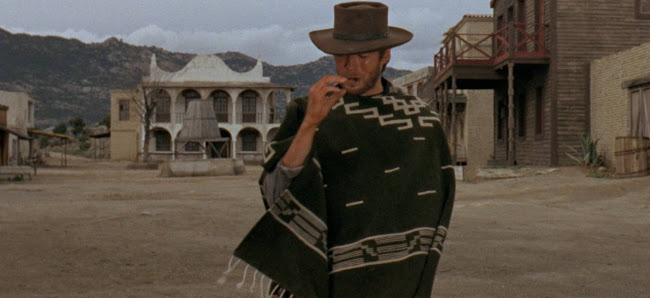
This is yet another movie which ripped off a Japanese movie by Akira Kurosawa known as Yojimbo.


After Akira saw the movie, A Fist Full of Dollars, he immediately contacted the director saying it was his movie. He later received an out-of-court settlement.

Lilo and Stitch

While it wasn’t the whole movie that was a plagiarized version of another movie, a very important part of it was downright stolen.


The character Stitch was stolen from a comic from 1987 called Sam and Max by Steve Purcell.

Max was the character which Stitch was based on. Worse of all, it was done without the permission of Steve Purcell.

Ice age

Ice Age was a blockbuster animated movie from 2002 which made a whopping 43 million dollars on its opening weekend alone. Too bad none of it went to Ivy Silberstein.


The little squirrel who is always obsessed with a nut was actually based off a trademarked character by Ivy known as Sqrat. She pitched the character to Fox but was unsuccessful.

Imagine her surprise when she saw her own character in a movie she got nothing from.

Well played Fox, well played.

Titanic

The huge mega-blockbuster from 1997 is actually contains scenes that were blatantly ripped off from another familiar movie you might know as Aladdin (1992).


Several scenes actually contain identical lines and imagery from the cartoon.

No lawsuits were filed though.

Tango and Cash

The action-thriller featuring Sylvester “Rambo” Stallone and Kurt Russel was a shameless plagiarism of the movie Police Story starring Jackie Chan.


Both movies feature an extremely similar plot and scenes which were downright stolen from Police Story.

No wonder Stallone is sometimes called “Sly”. That was some sly handiwork right there.

Ted

Who doesn’t love the foul-mouthed, crack-smoking, adorable teddy bear from the movie Ted? Too bad he wasn’t original.


Ted is actually a rehashed character from a cartoon strip by Lucan Turnbloom known as Clovis the talking bear.

Both teddy bears are identical to the point of them being addicted to alcohol. It couldn’t be clearer.

Family Guy

You never would have guessed that Family Guy’s Stewie Griffin is actually a plagiarized character.


Years before Family Guy came to life, a character extremely similar to Stewie had already been existing in Chris Ware’s novels.

Simple case of stolen character right here. Whether Chris sued and got his share of the cake is unknown to me.

Batman (2008)

Yes. Even Batman is not above plagiarism. You might remember a scene from the movie where the lines: “This is what happens when an unstoppable force meets an immovable object”.


That sounds like some original writing from the screenwriters. Except that something very similar was mentioned in the movie, Kickboxer 2 in 1991.

It seems we can’t even trust Batman anymore.

Back to the Future

This might not be considered plagiarism but it damn near foots the bill. A similar plot which is: a mad scientist constructs a breakfast-making machine to feel fulfilled, was first introduced in 1967 by a movie called Chitty Chitty Bang Bang.


You’ll notice that exact plot in the original Back to the Future movie. Although, several other movies such as Honey, I blew up the kids, The Wrong Trousers, etc. are guilty of the exact same thing.


This article was written by Edusson community.

16 November 2016

Before Trump Can Wreck The Climate...

by
Image via Avaaz.org
Dear Avaazers everywhere,

In 67 days, President Trump could go to war with climate action.But governments are at their annual climate summit right now. If we act fast,​ we could get them to lock in progress before he can destroy everything we worked for.

Germany, China, India, Brazil, the climate vulnerable countries, and others are reasserting their commitment to the Paris climate deal. But if enough of us call for it we could get them to urgently lock in the way to zero climate pollution, demand the US keeps its Paris promise, and commit to advance faster towards climate solutions that Trump won't be able to stop.

Let's ask them to make an unequivocal statement for climate action, regardless of what Trump does. Avaaz has staff inside the summit -- let's make this the biggest public call ever to show we will fight like hell for everything we love -- it'll be delivered directly to governments.
Sign the Paris protection petition​,​ and​ share this with everyone!
Trump​ has called climate change a hoax, dismissed the Paris​ ​agreement, and just gave a climate denier with ties to Big Oil the job of determining his environmental policy in the next few months! 

But over 100 countries have signed up and Paris is already in force. Now the world's most vulnerable countries are leading the charge for urgent climate action. Yesterday, Germany announced a bold new plan to radically cut carbon and, crucially, China is shutting down coal and breaking records on renewable energy. India too. 

Trump could pull the US out of the UN climate convention when he comes to power -- and as the world’s largest per capita emitter, that will have huge impact not only on the people of the US, but on all of us. But such a withdrawal is a bureaucratic nightmare that could take years. If enough of us join together now with a roar of NO! we can find ways to stop it, and ensure the rest of the world speeds up if the US slows down. 

We simply can't let this ignorant billionaire destroy the only path to save our planet. Let's go all out now to keep the world on track when Trump takes office
Sign now to get our leaders to recommit to our planet and share this!
Together​,​ we helped make the landmark Paris climate agreement possible. We marched, donated, signed, and called. In the end, we helped push good leaders to be champions and made it difficult for anyone trying to block progress. Paris was always a starting point. We still have a long way to go to save everything we love from climate change. But if we lose it now, this shot at global cooperation is gone. This week we must act. 

With hope,

Loup Dargent
On behalf of Iain, Alice, Pascal, Risalat, Fatima, Ricken and the whole Avaaz team


Image via Avaaz.org

MORE INFORMATION:


More Donald Trump Related Stories:
Click here for more Donald Trump related stories...

15 November 2016

How Brexit And Trump Will Affect James Bond

by
Karl-Josef Hildenbrand/EPA
By Klaus Dodds, Royal Holloway and Lisa Funnell, University of Oklahoma

James Bond will likely next grace cinema screens towards the end of 2018. Whether he will inhabit a filmic world in which the UK is no longer a member of the European Union and Donald Trump is the US president is yet to be seen – but if so, what a different world it will be. Bond’s mission is likely to involve the navigation of an increasingly porous Europe, vulnerable to malign influences from a resurgent Russia. The UK’s cyber-security defences face further challenges as industrial espionage and military and intelligence hacking intensifies. Bond is going to have his work cut out for him.

So it’s interesting to consider how these changes might effect Britain’s premier super-spy. As we explore in our new book, The Geographies, Genders and Geopolitics of James Bond, Bond’s geographical mobility is pivotal to mission success. And however good he is, he needs allies and access to the resources that they are able to mobilise. Take away those “assets” and Bond’s agency is degraded. So do these tumultuous times – with the possible end of the Anglo-American special relationship and UK-European co-operation – also mean the end of Bond as we know it?

Since Bond is British, Brexit and the contemporary backlash against globalisation seem the most obvious things to consider. The ramifications of the UK’s withdrawal from the EU and the disillusionment with neo-liberal globalisation will certainly alter the way in which he is able to move and execute his secret missions in both subtle and not so subtle ways.


Brexit Bond
Brexit will certainly have an impact on his mobility. In most of the films featuring airports, including the earliest Dr No (1962), Bond is depicted as walking through them with brio, as a man untroubled by the “petty sovereigns” (as literary critic Judith Butler might have it) who administer and police airports. Travel could become more complicated for a post-Brexit Bond. His ability to glide through customs and border inspections airports and seaports would certainly diminish.

So new storylines might place further emphasis on Bond’s ability to circumvent conventional state controls and offer up further evidence of MI6 investing in multiple passports. As the Jason Bourne series suggested, an assassin needs, among other things, a decent selection of passports, including those of close allies such as Canada and New Zealand and adversaries such as Russia.

But M will likely have bigger concerns than passport problems, because the UK may suffer when it comes to cooperation with EU intelligence agencies. In Spectre (2015), we learned of the “Nine Eyes” intelligence network that included traditional working partners such as the United States and newer members like South Africa. But this network would likely be compromised in this emerging nationalistic world. European partners might react badly to Brexit and tell the UK to rely on the United States. Disillusionment with globalisation more generally might make partners less likely to share information and secrets – every state for itself could become the new rallying cry even for the closest of allies.


The ‘special relationship’
Working with the United States might be tricky, though. Recent Bond films have suggested a more ambivalent relationship with the former “special partner”. The CIA’s Felix Leiter was helpful in Casino Royale (2006) and Quantum of Solace (2008) but did not feature in the two most recent films. The warm relationship that Bond enjoyed with earlier incarnations of Leiter has long gone. In recent years, other spy films like M1-5 (2015) and Eye in the Sky (2015) have also raised concerns about the role, viability, and morality of British intelligence, particularly when collaborating with US military and intelligence agencies.

This sense of unease with the UK-US relationship is sure to only increase with Trump as president. He may prime his administration to insulate and isolate the United States from forms of globalisation that are antithetical America’s recovery to “greatness”. America (as represented through the CIA) may well not want to work with Bond/M16 and share its resources and intelligence as part of a new directive to #MakeAmericaGreatAgain. Leiter could be told in the future not to share intelligence with Bond because America needs to protect its interests first and foremost.

So in a world without the security of an Anglo-American connection in addition to the degradation of European partnerships, Bond’s role is likely to look very different. Will Bond still fight for global security or be repositioned more and more as a lone hero who fights for Britain and its safety in a post-globalised world? It might be too much to think that Bond could make Britain “great” again but he could help to stop a further “slide” down the international pecking order.

Goodbye Britain? Geoff Caddick/EPA

Bond’s Britain
And what might Brexit do to Bond’s relationship with the country itself? In Skyfall we see Bond’s ancestral home in Scotland and his retreat to his family estate is critical to luring the villainous Raoul Silva away from a chaos-ridden London. While M dies in Scotland, Bond’s return to London is foregrounded by his pose on top of a government building in the centre of the city. Large Union Jack flags are fluttering away on top of the structure while others serve as part of an official tribute to the late M.

Skyfall is overwhelmingly a celebration of a United Kingdom. Bond’s Anglo-Scottish heritage is integral to his movement from London to Scotland and back again. But given a divisive Brexit vote in June, might Bond’s identity shift and become a more English in the wake of Scotland’s overwhelming vote to remain in the European Union?

And if the process of Brexit proves troubling and time consuming as we expect, leading to heated discussions about parliamentary scrutiny, MI6 may be the victim of a blowback as parliamentarians seek to reclaim their authority from the executive. The late M was very vexed about such scrutiny; she patently did not care for it. Bond will have to hope that he and MI6 are still “trusted” and permitted to operate in the “shadows”, and allowed to do so in a world where nations find it harder than ever to trust each other, let alone the global political and economic system.
The Conversation

About Today Contributors 
Klaus Dodds, Professor of Geopolitics, Royal Holloway and Lisa Funnell, Assistant Professor, Women’s and Gender Studies, University of Oklahoma


This article was originally published on The Conversation

You Might Also Like