8 February 2018

KKK, Alt-Right Groups Target Author Over Controversial Novel "The Slave Players"

by
The Slave Players - Cover
The Slave Players
In a continuingly heated and contentious social and political landscape, art often serves as the catalyst for conversation and education, but one book, The Slave Players, has incited tremendous backlash against both the author and publisher from vocal hate groups across America.
"What began as one woman's unique perspective and twist on race relations in the South has turned into a hostile campaign against a very skilled writer who put pen to paper to explore her fears," says David Adams, CEO of Burn House Publishing. "While many recognize The Slave Players as art and a departure into different themes of our divisive political climate, certain groups committed to racial discrimination and unrest are trying to threaten her into silence."
The Slave Players, written by Megan Allen, fictionalizes a present-day Alabama that is undone by a racial uprising brought on by a horrific tragedy. The nightmare act sparks a new Civil War, and the revolt of a still-subjugated group places the white citizens of Alabama in the same bondage that countless black slaves endured during our country's history of slavery.
After the book's release, hate mail and social media content - including YouTube videos calling for violence - have targeted both Allen and Burn House Publishing. While much of the inflammatory correspondence has come from alt-right circles, the Ku Klux Klan is taking a more aggressive approach to the hateful rhetoric.
In a widely circulated letter that has appeared on dozens of college campuses, the KKK wrote, "It is loud-mouth literature that poisons society against us. And we must all stand together against it. A novel is out titled The Slave Playerswhich was clearly written just to agitate the college educated, who always think they have a better answer for the woes of the world." The Klan's Imperial Grand Wizard, Chris Barker, took things furthers, releasing a grotesque and vulgar response on YouTube attacking African Americans and Allen, literally tearing the novel to pieces in front of the camera.
"I wrote The Slave Players as an alternate viewpoint to some of the underlying discriminatory tones in our society that have recently surfaced in present-day events like our last Presidential Election," says Megan Allen, author of The Slave Players.  "And through the heartbreak of tragedies like Ferguson, we've seen the birth of landmark groups that are finding their voice, like Black Lives Matter.  It's movements like these that inspire progress.  The #MeToo movement is very similar, as women finally broke through to find their power – their authentic voice.  This is why dialogue is so critical for our society to first understand and then to heal."
As the anger over the book spreads, so does the support. The Slave Players is quickly becoming a book club favorite, and is sparking much conversation – and controversy – on social media. The book follows race relations in the South to a terrifyingly possible conclusion, and holds an unflattering mirror to each and every American. We can't continue to look at our advancements and ourselves as a nation through rose-colored glasses, and author Megan Allen is more than happy to tear them off to open our eyes to what is really happening in our backyard.
About The Slave Players
(via The Slave Players site)
"It’s modern day in the Deep South. Racial unrest is rampant, and outbreaks of violence reach epidemic proportions. When a church bus makes a wrong turn in the Alabama countryside, a dozen teenage girls become victims of a heinous crime. The resulting outcry is explosive, as a new civil war erupts, but this time it will be whites who are cast into bondage. And Slave Playing becomes a cruel game of tyranny and survival.

The story winds and unwinds as it coils around the reader like a great serpent. At times it will be a love story, with warmth, humor and human kindness. But mostly it will slap hard at the Wall-Builders, and those who would be king at the expense of others, who would be prey. And a man will arrive on this tiny speck of land in the heart of Alabama. He will bring with him a whip, and a lesson of what tyranny and oppression can do to the human spirit."
About the author: 
Megan Allen
Author Megan Allen
Megan Allen is a 27 year old California native who received her Bachelor's from UC Berkeley and her Master's in creative writing from the University of Edinburgh

After graduating she spent long periods of time in the Deep South visiting her father. And it was there she found inspiration for her debut novel, The Slave Players. 

She writes, "I grew up naively, and had no idea that racism still prevailed with such intensity in my own country. Then I met Alabama."


SOURCE: Burn House Publishing

Bonus Videos:


7 February 2018

The Spectre Of Fascism Haunts Italy After Attempted Massacre Forces African Migrants To Stay Indoors

by
Italy - Aftermath of an attempted massacre
Aftermath of an attempted massacre. (Guido Picchio/EPA)
By Paolo Novak, SOAS, University of London

It didn’t matter where they were: in front of a cafĆ©, a tobacconist, or the train station. It didn’t seem to matter who they were: men or women, Italian citizens, “regular” immigrants or asylum seekers. So long as they were black.

A shooting rampage against African migrants in the town of Macerata, in central Italy on February 2, unveiled the extent to which the debate about migration in Italy is shaped by fascist forces and racist ideas.

By the end of the rampage, six people had been shot, one woman and five men. One is in a regional hospital with a chest injury, the others suffered lesser injuries and are in stable conditions.

A 28-year-old man called Luca Traini, arrested at the scene draped in an Italian flag, was charged with an attempted racially-aggravated massacre. A copy of Mein Kampf and books on fascism in Italy were reportedly found at his flat. In 2017, Traini stood as a candidate for the far right Lega Nord at a local election, albeit scoring zero votes.

The attack came soon after the macabre death of Pamela Mastropietro, whose dismembered body was found in two suitcases in late January, dumped along the road near Macerata. A Nigerian man called Innocent Oseghale residing in Italy with an expired permesso di soggiorno (or permit of stay) was arrested the day after, accused of killing her.


The man identified by the police as Luca Traini
The man identified by the police as Luca Traini. (EPA)
Extra-ordinary lives
I never met Gideon Atzeke, Jennifer Otioto or any of the other victims of the attack, and hardly anyone has mentioned who they were. But I did meet many asylum seekers in Macerata in summer 2017 during my research on the Italian government’s reception system for asylum seekers. And even then, the everyday and institutional racism confronting them seemed to be their main preoccupation.

Talking to them on the phone in the days since the attack I’ve been struck by the fatalist nature with which they processed the events. A sign, perhaps, of their extraordinary lives, and of their ordinary fears, aspirations, and claims for a secure and decent life, all of which which are constantly devalued and obscured by the migration debate.

Some Nigerians blamed the accusations against Oshigale for putting “all Nigerians in a bad light”. Others evoked the violent and racist abuse they faced in Libya, drawing explicit parallels between their treatments in the two countries. Unfortunately, all seemed to agree that it was best for them to stay put in the hotels and houses where they are hosted, as they wait for their asylum claim to be processed.

I strongly encouraged them not to do so, and to join the various protests and marches that have already taken place or that are planned.

Ordinary racism
The attempted massacre appears to epitomise how fascist groups and ideas have been mainstreamed and glamorised in Italy, particularly in the run-up to elections on March 4.
After his arrest, Traini was heralded as a patriot by some on social media. Forza Nuova, the party founded by the far right politician Roberto Fiore, expressed full support for Traini and offered to pay his legal expenses.

Other political parties distanced themselves from his alleged actions. Yet they still managed to shift attention away from the political context of the rampage.

Casapound, a far right group, condemned the attack, and denied reports of Traini’s affiliation with them. Roberto Salvini, leader of the Lega Nord, tried to minimise Traini’s past candidature for his party, and linked the event to the “social confrontation” that is brought about by “uncontrolled migration”.

Silvio Berlusconi, the former prime minister and leader of Forza Italia, defined immigration as a “social bomb about to explode” and pledged to deport up to 600,000 irregular migrants. Other right wing parties, such as Fratelli d'Italia, used the events to emphasise their belief that Italy faces a security emergency caused by migration, which needs a strong response from the state.

Marco Minniti, Italy’s minister of the interior, a member of the Partito Democratico, appealed for unity. He tried to placate the situation by insisting that the shootings were unorganised and carried out by a loose cannon. The Five Star Movement, the largest party in Italy according to polls, insisted that it was the responsibility of political parties to maintain “silence” about the attack.

As the migrant support group Coordinamento Migranti asserted, underlying these responses lies a growing racism which pervades Italian politics and which frames migration as a threat to Italians, and seeks to legitimise military and security solutions.

The ConversationI believe this was an act of terrorism and that it wasn’t an isolated event, but the latest episode of a series of fascist aggressions aimed at intimidating immigrants and those who support them. A strong mobilisation is required against this drift.

About Today's Contributor:
Paolo Novak, Lecturer, Development Studies, SOAS, University of London


This article was originally published on The Conversation

5 February 2018

The Sci-Fi Graphic Novel "Ancient Astronauts" Is Out Now!

by
Ancient Astronauts - Cover
Today, Black Panel Press announces the release of "Ancient Astronauts," an original sci-fi graphic novel painted entirely in watercolor by Vincent Pompetti.

The 168-page book, set on the distant planet Plaine, tells the story of the young and daring archer, Onys Di Chieti, and the mysterious entity invading her new home planet. The sudden arrival of Yulunga, the astonishing shaman, will open the doors to a universe wholly unexpected by the young Onys. 
"Ancient Astronauts is an ambitious fantasy scifi-graphic novel with outstanding world building," writes Kelsey McConnell of ComicsVerse, "the artwork is beyond talented." 
⏩ Following a successful crowdfunding campaign on Kickstarter.com, the book is now available in print and digital formats on blackpanelpress.com, Amazon.com, and Comixology.com.
Ancient Astronauts (Page 9 - Captain Mark)

More About "Ancient Astronauts":
(Via Black Panel Press)
Millions of galaxies are scattered across the cosmos. Lost among them, a world similar to ours develops in its own solar system. On Plaine, a highly developed planet-nation, the dawn reveals Onys, a young and daring archer. She emerges from sleep, short of breath, alerted by something heavy and dangerous lingering around her. An imperceptible but undeniable entity, defying the laws of physics, manifesting itself like a cloud of smoke, almost palpable. A presence whose mysterious nature would soon shake her perceptions of reality.

The sudden arrival of Yulunga, the astonishing shaman, will open the doors to a universe wholly unexpected by the young Onys. A place where the interpretation of what is real is commanded by the subconscious. A place at the center of which, the laws of nature are defied by the power of the mind.

What if, since the beginning of time, there was something else? Maybe, it was the world of Ancient Astronauts.
The Trailer:

About Vincent Pompetti:
Vincent Pompetti
Vincent Pompetti (image via Black Panel Press)
Vincent Pompetti is an Italian artist born in LiĆØge, Belgium, originally from Pineto and Atri, in the Abruzzo region of Italy. Trained in fine arts at the St. Luc Institute of Fine Arts in Brussels, he has worked on numerous graphic novels including Sir Arthur Benton, The Gallic Wars, and the pirate story, The Corsair.


Bonus Videos:


2 February 2018

Time's Up: The 'Pale, Male And Stale' Hollywood Of Harvey Weinstein Is Over

by

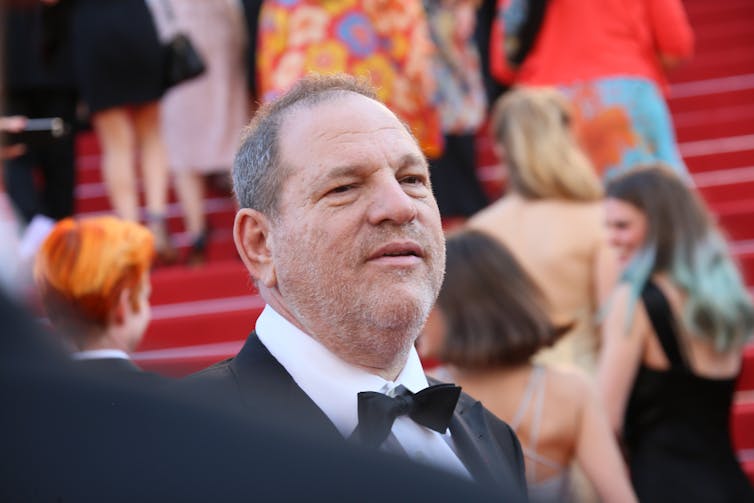
Harvey Weinstein
Harvey Weinstein (image via  Shutterstock)
By: Helena Bassil-Mozorow, Glasgow Caledonian University and Katy Proctor, Glasgow Caledonian University


For the past 20 years, an increasingly repetitive Hollywood has been serving up bland blockbusters with male protagonists supported by busty blondes on the narrative sidelines, pseudo-intellectual disaster sci-fi, and endless comedies about weddings or stag nights and being lost in Los Angeles. For high-profile culture, Hollywood has offered audiences an exceedingly narrow view of the world.

This may paint a picture of intellectual decay and creative stagnation, but it’s actually worse than that. For decades we have been subjected to films in which women are 10 or more years younger than their male counterparts; where a James Bond character is accepted as sexy and valued in his 50s and 60s, yet the female sidekick is seen as attractive only if she is under 30 and conventionally beautiful.

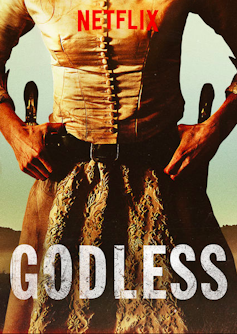
Godless
A hit series on Netflix, Godless is a Western that focuses squarely on women.(Netflix)

These women are flat, two-dimensional dolls devoid of darkness, moral or maternal imperfection, doubt or ambiguity. Their only function is to support men in their moral struggles and help them uncoil their fascinating internal complexities.

These narratives are not surprising given the demographics of decision-makers in Hollywood – that is male, pale and stale. The sorry Weinstein affair has particularly brought this imbalance of power to the fore. It turns out the accepted misogyny displayed in Hollywood film is a reflection of a misogynistic and abusive reality being played out in the dynamics of the film industry.

Power and glory
This concept of “narrative choice” is important. We know that people have a tendency to recreate their own vision of the world, not necessarily consciously or with malice. This is what they know and accept as the norm. But in choosing to recreate that narrative they are simply reinforcing and maintaining these norms.

In the context of Hollywood and Harvey Weinstein, the norms being reinforced and maintained are those of gender inequality. Hollywood men with power recreate their world of inequality on screen, promoting and legitimising tired and outdated stereotypes in our society and culture. It is these “norms” that allow an industry and the individuals within it to abuse and exploit, or to be abused and exploited without challenge or intervention.
YouTube/DC Comics.
The power to choose directors, actors and actresses, storylines and cultural context comes with the potential to have enormous influence over individual, social, and cultural assumptions. For some reason, few doubted the repetitive rigidity of these industry choices, and only now do we begin to notice that, like a metaphorical hostage, the films we watched without thought have been covertly communicating the place and value of women relative to men since films began.

In 2016, women made up just 7% of all directors of the top 250 films; in 2017 that went up four points to 11%. But Hollywood also suffers from a racial inclusion crisis, with very few ethnic minority producers and directors making it to the top.

In a multi-billion dollar industry there is a lot at stake in a very competitive and ruthless environment. As a result, narrative decisions in the biggest entertainment structure in the world are made by those in established positions of power – ruthless but risk-averse middle-aged white men. When this is translated into narratives about relationships and sexual power, dangerous precedents can be set.

Bridget Jones
Bridget Jones, the much-loved chick flick from Weinstein’s Miramax, would not have passed the Bechdel test. (Miramax)

For instance, Woody Allen’s films (such as Manhattan) contain numerous references to old men dating very young women, which in any other context would be considered concerning. Quentin Tarantino’s films overtly sexualise violence, often by trivialising the threat with humour.

Formulaic “chick flicks” such as Bridget Jones, reproduce the common movie assumption that a woman’s sole purpose in life is to find a man – and until she achieves that, she is a figure of fun or pity.

Equally predictable action films romanticise the extremes of masculine and feminine stereotypes – powerful men and submissive women. Most of them would not pass the so-called “Bechdel test” which asks simple but provocative questions: does a narrative contain two female characters, and do they speak to each other of something other than men?

Smashing the Hollywood monopoly
Luckily, on-demand television and media streaming arrived just in time to shake up, then directly challenge, the industry, saving it from itself. HBO, Netflix, Amazon and the BBC all began to offer narratives that went beyond the limited tastes and perspectives of the average Hollywood decision-maker.

Shows such as Luke Cage and Jessica Jones envisaged a superhero who is not white, or even a man. Orange is the New Black, I Love Dick and Fleabag depicted the never-seen before – multi-dimensional female characters exhibiting aggression, criminality, promiscuity, alternative sexuality and the capacity to shape and achieve their own ambitions.

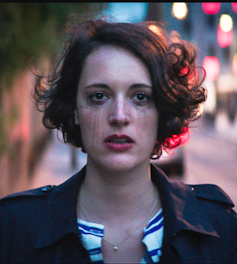
Fleabag
Fleabag featured the messy life of a funny, foul-mouthed thirtysomething woman. BBC

Other complex, fleshed-out female characters could be found in Girls (a 21st-century Sex and the City), Glow (a comedy about female wrestling), Godless (a female Western series) and Top of the Lake (a troubled female detective drama).

And at last there was an array of morally ambiguous but rather sympathetic female characters: Peggy Blumquist in Fargo 2, Nikki Swango in Fargo 3, Scandi-Noir detectives Sara Lund (The Killing) and Saga Noren (The Bridge) and most of the female characters in Orange is the New Black.

Rather awkwardly and much too late, Hollywood has been trying to copy this trend. Now Star Wars has a female protagonist in the form of Rey. There’s even a female superhero in Wonder Woman – a protagonist proper, with no men attached to her story. Before them there were, of course, Ridley Scott’s female bad-asses such as Ripley in the Alien franchise, Thelma and Louise and Lieutenant Jordan O’Neil in GI Jane, who all fought for the right to be seen as human beings in a world otherwise run by men.

Greta Gerwig
Greta Gerwig has been nominated for Best Director at this year’s Oscars for Ladybird (via Shutterstock)

With the revulsion caused by the uncovering of Weinstein’s abuse of power and the exposure of unequal pay highlighting the shocking lack of gender equality, it feels like finally those narratives are about to change. Women everywhere celebrate every milestone on the road to equality – this year Greta Gerwig has been nominated for best director at the Oscars, and with only five other women ever nominated (and only one, Kathryn Bigelow, winning) in the awards’ 90-year history, this is a big deal.

The ConversationThe powerless have been given a voice with which they can make demands, challenges and criticisms of the Hollywood we know. The genie is out of the bottle and she’s not going back in.

About Today's Contributors:
Helena Bassil-Mozorow, Lecturer in Media and Journalism, Glasgow Caledonian University and Katy Proctor, Lecturer in Criminology and Policing, Glasgow Caledonian University


This article was originally published on The Conversation.

23 January 2018

An International Tribunal on Human Rights and Fracking

by
Fracking
"Fracking" (Image via Oregon State University)
The practice of extracting natural gas by hydraulic fracturing, or fracking, has come under intense scrutiny in recent years for its profound impacts on water, land, people, and climate change. To examine the morality of these impacts, an international human-rights forum called the Permanent Peoples' Tribunal has scheduled its next session on the topic of fracking. 
The Permanent Peoples' Tribunal on Human Rights, Fracking, and Climate Change will be held from May 14 to 18, 2018.
During the Tribunal, attorneys with expertise in human rights law will present evidence to a panel of international judges. The attorneys will build their cases with testimony from expert witnesses and those who have felt the effects of fracking first-hand. Between now and March 1, anyone who has been impacted by fracking can testify by submitting a statement online or by contacting Spring Creek Project, a co-organizer of the Tribunal.

For the first time, the Tribunal's proceedings will take place virtually, using Zoom conferencing software, and be broadcast live around the world. Viewers can watch the live feed via the Spring Creek Project Facebook page, and communities and organizations are invited to host live screenings.

While the Tribunal is not affiliated with a State and its ruling will not carry the weight of law, the collected testimony and resulting judicial opinion may be used in future legal proceedings taken against corporations or State actors that undermine human rights norms through fracking.

⏩ In conjunction with the Tribunal, Spring Creek Project will present the Bedrock Lectures on Human Rights and Climate Change, an online lecture series. Beginning January 31, the organization will release one new lecture each Wednesday on its Facebook and YouTube pages. 
This series, which will include about 20 speakers, will contribute to the important conversation about the nexus of human rights and climate change. Lecturers include Bill McKibben, founder of 350.org; Winona LaDuke, executive director of Honor the Earth; and Josh Fox, documentary filmmaker of Gasland. 

6 Ways You Can Be Involved in the Tribunal
(From the Spring Creek Project Page)

Because the Tribunal is global in scope, many people around the world will have the opportunity to become involved, whether as a witness or a viewer. Here are ways you can participate:

1. Provide Witness Testimony. In preparation for the Tribunal, testimony is being gathered from those who have experienced the impacts of fracking. Anyone in the world can contribute their stories as testimony by the end of February 2018. Testimony could take many different shapes. It could be written or recorded; it could be a document, video, or photo; and it could be as brief or as elaborate as you wish. If you have testimony to share, we invite you to do so online through the Tribunal’s Witness Testimony page.

2. Hold a Pre-Tribunal. If you feel like your community has more to offer, you could organize a pre-PPT tribunal. Hosting one of these tribunals is an opportunity to empower your community to share their stories and make their own judgment. They have already been held in Athens, Ohio; Youngstown, Ohio; and Charlottesville, Virginia. To gather ideas about how you might structure a pre-tribunal, you can view footage from the Charlottesville mini-tribunal. For more details on organizing such an event, visit the Tribunal’s guidelines.

3. Watch the Tribunal Live. The judges and attorneys will be participating from around the world, convening through Zoom conferencing software. This is the first Tribunal to be held virtually, meaning a larger audience than ever before can follow along with the proceedings in real time. To access the live feed, check the Spring Creek Project website as we get closer to the start of the Tribunal on May 14, 2018.

4. Host a Community Viewing of the Live-Streamed Tribunal. You or your organization could arrange a live-streamed screening of the proceedings in your community. You could include a discussion period after the live screening to share reactions and ideas. 

5. Attend the Kick-Off Keynote. The opening day of the Tribunal, May 14, ecologist and author Sandra Steingraber will give a keynote lecture at the Whiteside Theatre in Corvallis, Oregon, at 7:00 p.m. on the topic of human rights and fracking. If you live in the Corvallis area, please join us. The lecture is free and open to the public. 

6. Spread the Word. We hope the Tribunal will help spark conversations and action about human rights, fracking and climate change around the world. Please help us spread the word by sharing this article with friends and on social media. 

About the Spring Creek Project:
The Spring Creek Project, an initiative affiliated with Oregon State University, engages the most urgent environmental issues of our time. Its challenge is to bring together the practical wisdom of the environmental sciences, the clarity of philosophical analysis, and the creative, expressive power of the written word, to find new ways to understand and re-imagine our relation to the natural world.

About the Permanent Peoples' Tribunal:
The Permanent Peoples' Tribunal is an influential, international forum that evolved from the Russell-Sartre Tribunal created to determine whether breaches of human rights norms occurred during the Vietnam War. Since 1979, it has conducted more than 40 high-profile hearings around the world to determine whether human-rights standards were abridged.


You Might Also Like