13 February 2019

#ArmMeWithGames: Leading Game Designers & Educators Come Together to Recommend 20 Empathy Games For Young People Growing Up In The Shadow Of School Shootings

by
Literary Safari Media's #ArmMeWithGames list features 20 empathy and social emotional learning game recommendations for young people growing up in the shadow of lockdown drills and school shootings
Literary Safari Media's #ArmMeWithGames list features 20 empathy and social emotional learning game recommendations for young people growing up in the shadow of lockdown drills and school shootings. It is a companion resource to the #ArmMeWithBooks list which features reading recommendations from over 50 award-winning children's authors and librarians.
In remembrance of the one-year anniversary of the shooting at Marjorie Stoneman Douglas High School in Parkland, Florida, the New York City-based studio Literary Safari Media has released an #ArmMeWithGames list of 20 award-winning games that can build empathy and social-emotional learning

At a time when video games are blamed for violence and even, mass school shootings, the #ArmMeWithGames list invites parents and educators to take a more nuanced view toward the role of games in the lives of young people. 

The list features letters to parents and teachers from Joel Levin, technology educator and founder of MinecraftEdu, and Dr. Karen Schrier, author of Knowledge Games: How Playing Games Can Solve Problems, Create Insight, and Make Change, along with game recommendations from leading game designers, researchers, and educators such as Barry Joseph, head of Digital at Girl Scouts USA, Asi Burak, author of Power Play: How Video Games Can Save the World, and Susanna Pollack, President of Games for Change. 

Featured games include Never Alone (E-Line Media), Sign, and Zoo-U.
"This list curates some of the best and most innovative game experiences that can help foster social emotional learning in children," says Matthew Farber, a professor of technology at the University of Northern Colorado and author of Game-Based Learning in Action.
Also releasing in remembrance of the one-year anniversary of the Parkland tragedy is a free, downloadable adaptation of Literary Safari's graphic novella William H.G. Butler Middle School
Also releasing in remembrance of the one-year anniversary of the Parkland tragedy is a free, downloadable adaptation of Literary Safari's graphic novella William H.G. Butler Middle School, which was created on Instagram, and a new discussion guide for students, parents, and teachers that was written by a middle school Language Arts teacher. " "The format of the narrative feels very connected to our techno-cultural moment," says Josh Neufeld, Eisner Award nominated comics journalist.
⏩ The #ArmMeWithGames list is a companion resource to Literary Safari's #ArmMeWithBooks list of book recommendations from award-winning children's authors which was released in December 2018 on the 6th anniversary of Sandy Hook Elementary School shooting. In creating these resources, the studio was inspired by the viral teacher-driven #ArmMeWith social media campaign that emerged in response to politicians' suggestion that teachers be armed with guns to prevent further school shootings.
"While gun reform legislation and school safety take center stage amongst legislators and in the media, what I see as being less discussed is the very real impact of lockdown drills and school shootings on the emotional lives of young people, educators, and families," said Sandhya Nankani, founder of Literary Safari and a mother herself. "This week, we are also releasing a downloadable PDF version of our Instagram-style graphic novella, William H.G. Butler Middle School, which inspired our #ArmMeWith campaign. The graphic novella comes with a discussion guide written by a middle school teacher. It is our hope that the story and the companion questions can be used as a tool to foster dialogue among and between students, parents, and educators."

Quick Links:

12 February 2019

Marvel Studios' "Captain Marvel" to be Released in ScreenX

by
Captain Marvel in ScreenX
Captain Marvel in ScreenX 
CJ 4DPLEX has announced today that Marvel Studios' "Captain Marvel," is coming to theaters in the ScreenX format on March 8, 2018.

"Captain Marvel" will be the third movie from Marvel to be converted into ScreenX, and the latest collaboration between The Walt Disney Studios and CJ 4DPLEX, following the globally successful ScreenX release of "Black Panther" and "Ant-Man and The Wasp". 

"Captain Marvel" stars Brie Larson in the title role and is directed by Anna Boden and Ryan Fleck.
ScreenX is the world's first multi-projection theatre technology that allows a 270-degree panoramic movie watching experience. ScreenX allows the audience to go beyond the frame of the traditional movie screen, utilizing a proprietary system to expand the center screen image to the side walls, surrounding audiences with imagery and providing a sense of being inside the movie.
"'Captain Marvel' is another great movie from the Marvel Cinematic Universe that continues to showcase the full potential of the ScreenX format by taking us on an otherworldly heroic journey," said JongRyul Kim, CEO of CJ 4DPLEX. "We are thrilled to team with The Walt Disney Studios and Marvel Studios to bring this inspiring new heroine to audiences in our newest cinematic experience."
Brie Larson as Captain Marvel

About "Captain Marvel":

Set in the 1990s, Marvel Studios' "Captain Marvel" is an all-new adventure from a previously unseen period in the history of the Marvel Cinematic Universe that follows the journey of Carol Danvers as she becomes one of the universe's most powerful heroes. While a galactic war between two alien races reaches Earth, Danvers finds herself and a small cadre of allies at the center of the maelstrom.

The film stars Brie Larson, Samuel L. Jackson, Ben Mendelsohn, Djimon Hounsou, Lee Pace, Lashana Lynch, Gemma Chan, Rune Temte, Algenis Perez Soto, Mckenna Grace, with Annette Bening, with Clark Gregg, and Jude Law.

Marvel Studios' "Captain Marvel" is produced by Kevin Feige and directed by Anna Boden and Ryan Fleck. Louis D'Esposito, Victoria Alonso, Jonathan Schwartz, Patricia Whitcher and Stan Lee are the executive producers. 

The story is by Nicole Perlman & Meg LeFauve and Anna Boden & Ryan Fleck & Geneva Robertson-Dworet, and the screenplay is by Anna Boden & Ryan Fleck & Geneva Robertson-Dworet. 
"Captain Marvel" opens on March 8, 2019 in U.S. theaters.

The Trailer:


Nerdist and Warner Bros. Interactive Entertainment Present "The Science of Mortal Kombat" Series, Premiering Feb. 18

by
The Science of Mortal Kombat
The Science of Mortal Kombat - Premieres February 18th
Nerdist's hit series Because Science has collaborated with Warner Bros. Interactive Entertainment to explore the science of Fatalities and iconic moves featured in the upcoming Mortal Kombat 11 videogame.

The original limited series, The Science of Mortal Kombat, premieres Feb. 18, guest starring reigning UFC Heavyweight Champion Daniel Cormier, and marks Nerdist's largest production ever, highlighting the creatively brutal and visually stunning gameplay which the best-selling Mortal Kombat franchise is known for.


The Science of Mortal Kombat will feature host Kyle Hill, professional Science Communicator and host of Nerdist's hit show Because Science, as he breaks down the science behind iconic Mortal Kombat 11 Fatalities, Scorpion's deadly spear attack, and powerful Krushing Blows with the help of special guests – Cormier and former WWE Champion, CM Punk.

Kyle and YouTuber and Mythbuster Allen Pan will utilize special super slow-motion cameras allowing for enhanced visuals to analyze and break down each iconic fight move in Mortal Kombat 11, such as the pressure and strength needed to break bones, the scientific analysis of a character's superhuman abilities, and much more.

The Trailer:

The six-episode series of high-intensity fight re-enactments and behind-the-scenes footage will begin airing weekly via Nerdist.com and YouTube.com/BecauseScience on Feb. 18. and can be watched on Nerdist and Because Science channels any time after each Monday airing.
Mortal Kombat 11 is the latest installment in the critically-acclaimed franchise, developed by award-winning NetherRealm Studios, and is scheduled for release beginning April 23 for PlayStation4 computer entertainment system, PlayStation4 Pro computer entertainment system, the Xbox One family of devices including the Xbox One X, Nintendo Switch system and PC. 

To learn more about Mortal Kombat 11, please visit www.mortalkombat.com 

About Nerdist:

Nerdist is a multi-platform media and entertainment network for fans of genre and pop culture content. With flagship content including Nerdist News hosted by Jessica Chobot, weekly shows Because Science and The Dan Cave, and daily in-depth editorial coverage, Nerdist reaches millions of people every day on Nerdist.com and on leading platforms including the premium streaming service Alpha, YouTube, and Facebook. 

Nerdist is owned by Legendary Entertainment and is part of Legendary Digital Networks, which also includes Geek & Sundry and Amy Poehler's Smart Girls.

About Because Science:


How hot is a lightsaber?
Why does Captain America's shield bounce?
How much energy does it take Thanos to throw a moon?
Nerdist science editor Kyle Hill answers questions about fictional phenomenon using real-world science in vlogs, livestreams, and a weekly show, whose popularity has grown exponentially since its launch in 2018. Kyle created the popular YouTube channel, which rocketed to 100,000 subscribers in just two weeks, and has since grown to over 750,000 subscribers with more than 150 million views. To date, fans have watched nearly one billion minutes of Because Science, or over 1800 years! Kyle's work has appeared in WIRED, Scientific American, and The Boston Globe. He has hosted MythBusters: The Search and appeared as an expert on Bill Nye Saves the World, FOX News, and BBC World Radio.

About NetherRealm Studios:

NetherRealm Studios is a leader in the development of interactive entertainment, and the creator of the billion-dollar Mortal Kombat franchise. Mortal Kombat has spawned two theatrical films, multiple television series, and has sold over 42 million games to date. Located in Chicago, Illinois, the award-winning NetherRealm team has been working and creating games together since 1992. 

Additional information about NetherRealm Studios can be found at www.netherrealm.com.


11 February 2019

The Kid Who Would Be King: Why King Arthur Films Are The Perfect Antidote To Epic Brexit Posturing

by
The Kid Who Would Be King
The Kid Who Would Be King  (20th Century Fox)
King Arthur probably never existed, but from a cinematic point of view, he may as well have done. Few figures, mythical or historical, have reappeared as frequently on the big screen. This winter, less than two years after Guy Ritchie’s 2017 King Arthur: The Legend of the Sword, comes a new take on the tales: The Kid Who Would Be King. But what is the appeal of this particular tale? And above all, why now?

The Kid Who Would Be King, like Ritchie’s film, is another take on a familiar trope. Like any legend, the Arthur myth is a cinematic template on which storytellers can impose their own ideas – and these variations can tell us a lot about the times and places that produced them. Monty Python and the Holy Grail (1975), for instance, with its medieval plagues and Marxist peasants, reflects parodically on the construction of national mythologies. Notably, this was at a time when Britain’s imperial and economic influence had dwindled.


The contexts of Brexit, inevitably, provide a backdrop to the more recent films. The Legend of the Sword is a popular retelling in every sense. Ritchie transposes his familiar London “low-life” milieu to the world of the Round Table, with his muscular Arthur a brothel-raised orphan, backed up by a multicultural array of petty thieves and streetfighters. The war here, with his usurping uncle, Vortigern, is more a people’s rebellion. Yet the film still ends with the newly crowned king demanding fealty from the Vikings, while rejecting their demands for British slaves.

Ritchie’s film was greeted in some quarters as a film about Brexit, but it could just as easily be an allegory about the Corbynite “revolution”, if you wanted it to. Yet it does draw on some of the Arthurian fables’ more nationalistic elements. The more dewy aspects of the legends – the Sword and the Stone, the Lady of the lake, Avalon – were recounted by Thomas Malory in 1485 and form the basis of all the most popular Arthurian retellings. Yet these largely obscure the King’s earlier, more militaristic depictions.

The circa 1400 anonymous poem Morte Arthure, for instance, focuses on Arthur’s resistance to paying Roman taxes and his campaign to reassert British dominion in Europe. The poem commemorates national Empire-building, as much as it mocks and scorns “continental” manners and morality. Transposed to our populist era of “hard men” politicians, Ritchie’s brawny Arthur comes with interesting connotations, inadvertently or otherwise.


A very British epic

More to the point, Arthurian films tell us about the cinematic contexts that produced them. Monty Python’s muddy take on the story may take its cues from realist European films such as 1973’s Lancelot du lac – but its cut-price epic style is born of the group having no money to spend: a common issue with British films of the impoverished 1970s. The Holy Grail’s contrast to Hollywood’s widescreen spectacles, such as Knights of the Round Table (1953) or Camelot (1967), is part of its comic point.

Similarly, The Legend of the Sword’s debt is less to contemporary politics and more to the recent traditions of epic film. The film inherits much of its style and narrative tropes from Ridley’s Scott’s Gladiator (2000), the epic that revived the genre, and demonstrated the international appeal of ancient stories.

Made at huge expense by Warner Bros at its Leavesden studios – and with the creative input of Harry Potter producer Lionel Wigram – Ritchie’s movie was itself seen as another global franchise in the making – until it flopped at the box-office. Ironically, then, this fiercely British film is “British” only in a limited sense. Like the Harry Potter films, it exemplifies the globalised nature of cinema: a “local” story financed by multinational capital, shot in a Hollywood-owned British studio and made for worldwide distribution.

Rejuvenating Arthur

By contrast, The Kid Who Would Be King offers a twist to this model. Here, the global genre of the epic is localised and brought down to earth – in this case, by transferring the legend to a modern secondary school, with a cast barely into their teens.


Other recent films have trodden the same ground. Edgar Wright’s 2013 The World’s End (another Working Title production) was a jokey modern take on Arthurian myth, its 12-pint pub crawl – led by fallen leader Gary King – its own legendary Grail quest. It’s also familiar territory for Kid Who Would Be King director Joe Cornish, whose 2011 debut, Attack the Block, banded inner-city youths against an alien invasion, as well as the Metropolitan Police.

This focus on the young in The Kid Who Would Be King is both cinematically welcome and topical in light of the generational schisms and social divisions highlighted and brought about by Brexit – a point highlighted by Cornish himself. By putting Excalibur in the hands of a gawky schoolkid, Cornish’s film offers a lighter-hearted alternative both to epic cinematic follies and delusions of national grandeur.

Joking it may partly be, yet with its allegiances to Britain’s future generation, the film becomes another politically charged return to this most potent national myth.The Conversation

About Today's Contributor:

Neil Archer, Lecturer in Film Studies, Keele University


This article is republished from The Conversation under a Creative Commons license. 

Related Stories:


9 February 2019

Autocracies That Look Like Democracies Are A Threat Across The Globe

by
A rally celebrating the second anniversary of Russia’s annexation of Crimea, March 18, 2016.
A rally celebrating the second anniversary of Russia’s annexation of Crimea, March 18, 2016. (AP/Ivan Sekretarev)
They’re a special kind of autocratic regime that masquerades as a democracy. And what looks like benevolent conduct by these countries can quickly change into aggressive, politically charged behavior.Russia’s successful interference in the 2016 U.S. presidential election may inspire other countries to do the same.

These other countries don’t look threatening. They look like democracies. But they’re not.
Autocracies, often known as “authoritarian regimes,” maintain power through centralized control over information and resources. Political opposition is either forbidden or strongly curtailed and individual freedom is limited by the state.

Autocracies that look like democracies are different because their leaders permit political opponents to run for election – even though they rarely win.

These countries’ capitalist systems have some of the trappings of liberal democracies in the West. But these regimes use capitalism to further their authoritarian rule.

These so-called “dominant party authoritarian regimes” have surged in number from around 13 percent of all countries before the end of the Cold War to around 33 percent today.

Most are located in Africa, the Middle East and Asia. They are also present in Eastern Europe and in the Americas. Russia is one of them; so are Turkey, Malaysia, Singapore and Venezuela.

These regimes often engage in the same kinds of bad behavior as other autocracies. But their behavior is critically different in both the motivations and methods used to further authoritarian ends, as detailed in my new book “Authoritarian Capitalism.”
The Russian military intelligence service building; 12 of its officers hacked into the Clinton presidential campaign.
The Russian military intelligence service building; 12 of its officers hacked into the Clinton presidential campaign. (AP/Pavel Golovkin)

Political control

Part of the danger with dominant party authoritarian regimes is that their veneer of democracy permits political opponents to run for election. But when incumbent rulers face a threat to their power, the autocrats often respond by targeting political dissidents and taking aggressive actions toward foreign enemies to bolster popular support.

For example, Russian leader Vladimir Putin faced an unprecedented challenge from citizen protests during the 2012 presidential election. The protests continued into 2013.

Putin punished the protesters. New York Times correspondent Ellen Barry reported in 2013 that “new laws prescribe draconian punishments for acts of dissent. … Mr. Putin … embraced a new, sharply conservative rhetoric, dismissing the urban protesters as traitors and blasphemers, enemies of Russia.”

Shortly afterward, Russia’s foreign activities became even more belligerent than during the Soviet period. This accomplished just what Putin wanted: Following his annexation of Crimea in 2014, his approval ratings skyrocketed.

Another recent example is Turkish leader Recep Tayyip Erdogan’s repression of domestic political dissidents following the failed July 2016 coup against him. According to The Guardian, the regime arrested or suspended “more than 110,000 officials, including judges, teachers, police and civil servants.”

Erdogan went after foreign-based dissidents too, allegedly orchestrating a plot to kidnap opposition leader Fetullah Gulen from Pennsylvania.

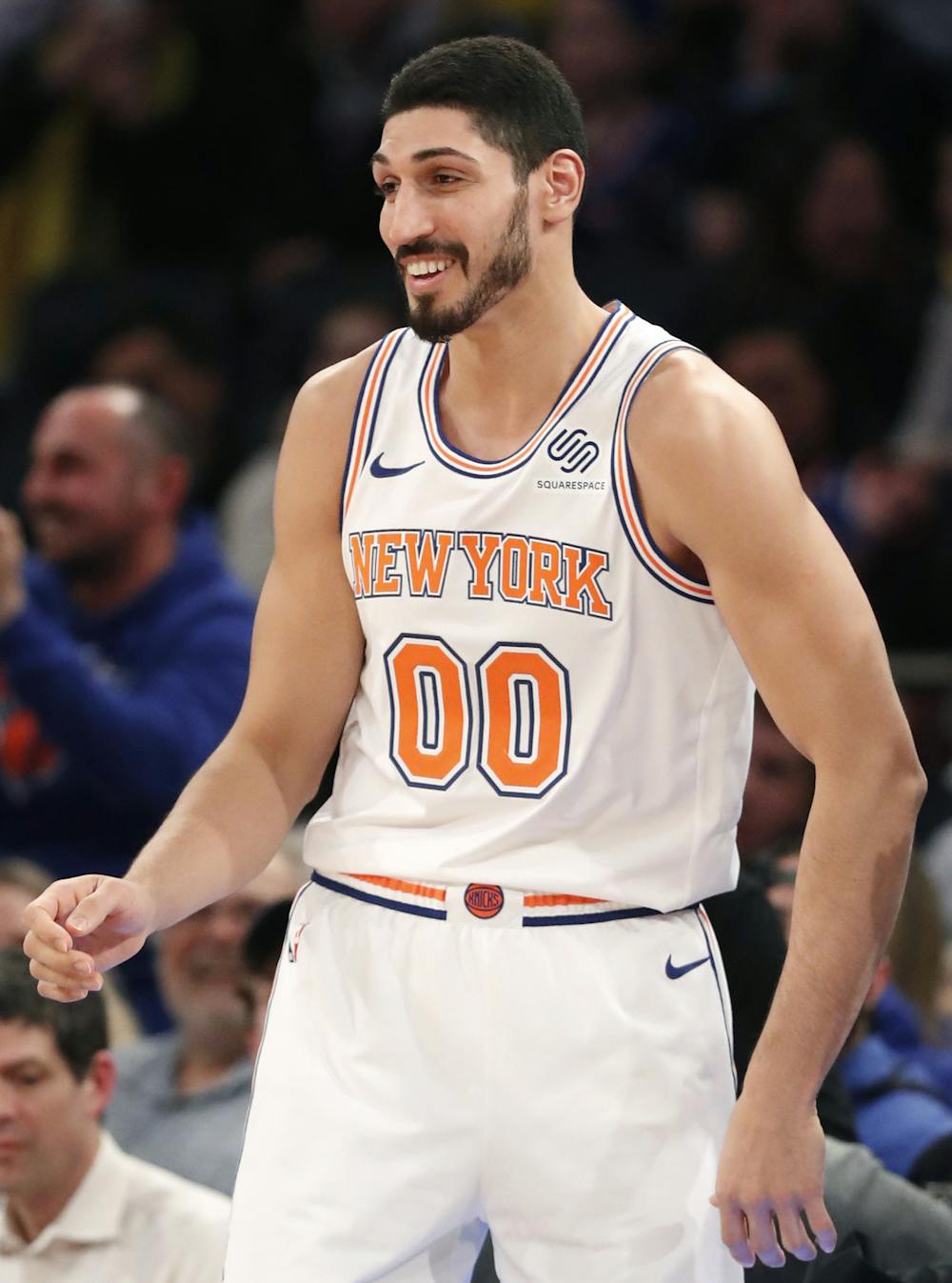
And while he won the presidential election in June 2018, Erdogan’s foreign-based critics remain concerned about his threats. Enes Kanter, a Turkish NBA star, declined to travel to London in January 2019 out of fear that Turkish spies might kill him.
Turkish NBA star Enes Kanter curtails foreign travel for fear of kidnapping by the Turkish government.
Turkish NBA star Enes Kanter curtails foreign travel for fear of kidnapping by the Turkish government. (AP/Kathy Willens)

Information control

Another distinction that characterizes dominant party authoritarian regimes is how they exploit Western legal and financial systems against Western media outlets critical of the regime.

Normally, autocrats control information and resources to retain power. But rather than relying on the typical autocrat’s crude hostile attacks or outright censorship, dominant party authoritarian regimes use legal or financial methods regarded as legitimate by the West.
In other words, they sue the media or they buy them.

A slew of foreign news organizations – including The New York Times, Wall Street Journal, Bloomberg and The Economist – were sued by the Lee family, autocratic rulers of Singapore, for political and financial reporting after the 2008 global financial crisis.

The family maintained the coverage defamed them. As the Wall Street Journal’s editors wrote in 2008, “We know of no foreign publication that has ever won in a Singapore court of law. Virtually every Western publication that circulates in the city-state has faced a lawsuit, or the threat of one.”

Malaysian political authorities deployed similar tactics when their rulers felt threatened.
Following the Asian financial crisis of 1997, and in the months leading up to the November 1999 general election, wealthy ruling party supporters in Malaysia filed a flurry of defamation lawsuits against foreign journalists and media organizations, such as the Asian Wall Street 
Journal and Dow Jones.

Russia’s means of pressuring foreign media are slightly different, but they also involve taking advantage of Western legal-financial systems.

Russia has engaged in disinformation campaigns that exploit weaknesses in the West’s freedom of speech protections, as documented by experts at the Center for Strategic and International Studies and at the Center for the Study of Democracy.

And Russian companies have acquired sufficiently large ownership stakes in foreign media companies to influence their operations.

This has involved both the manipulation of their coverage and a reduction in media freedoms of the country in which they are located.

For example, Delyan Peevski is a controversial member of the Bulgarian Parliament who advocated for pro-Russian policies. Peevski built and sustained a media empire that controls around 40 percent of Bulgaria’s print sector and 80 percent of the newspaper distribution with loans from a partially Russian-owned bank.
Delyan Peevski, right, the Russian-backed Bulgarian media mogul and politician.
Delyan Peevski, right, the Russian-backed Bulgarian media mogul and politician. (REUTERS/Petko Nalbantov/BGNES)

Resource control

In contrast to firms located in other types of autocracies, state-controlled businesses in dominant party authoritarian regimes often comply with international financial regulations. This helps them gain access to Western countries’ corporate and financial systems.

Under cover of legitimate business operations, their autocratic leaders can pursue political objectives with less scrutiny.

Malaysia’s state-owned investment fund, 1MDB, engaged in aggressive investment tactics with corrupt practices – including “abnormally high payback” for investment bankers – that extended across the globe.

The U.S. accuses former Prime Minister Najib Razak’s family friend of masterminding the theft of US$2 billion from the fund. And its capital was also channeled to politicians and projects to help the ruling party win the 2013 elections.

Russia has also used state-linked companies to gain influence over Hungary, Serbia and Bulgaria’s crucial energy sectors via purchases of ownership stakes in listed companies.

This granted the Russian state access to other key sectors of these economies, such as finance and telecommunications. Russia then was able to influence government policies.

In one case, the Serbian government chose not to enforce the European Union’s sanctions against Russia. That was a risk for Serbia, because it has wanted to qualify for European Union membership by 2025.

Even bolder actions occurred with Russia’s interference in the U.S. 2016 presidential election.

Michael McFaul, the former U.S. ambassador to Russia, told the Senate in September 2018 that never before had the Kremlin violated American sovereignty so illegally, aggressively and audaciously – even during the high-stakes rivalry of the Cold War.

It is now common knowledge that Russian-controlled agencies and businesses played a strategically vital role in the election interference.

Resisting influence

Can democracies defend themselves against such aggressive regimes?

The “Kremlin Playbook,” written by Heather A. Conley, James Mina, Ruslan Stefanov and Martin Vladimirov, is an extensive study of Russian influence in Hungary, Slovakia, Bulgaria, Latvia and Serbia. It provides a detailed list of policy recommendations to resist Russian influence that can be applied to other dominant party authoritarian regimes.

They include strengthening intelligence gathering and cooperation between the U.S. and its allies; increasing U.S. and allied governments’ assistance to vulnerable countries; and stronger protections for and enforcement of transparency measures.

But I believe an important addition to this list is the need to monitor the strength of the ruling party’s hold on power. That’s because aggressive, politically charged activities are most likely to occur when incumbent rulers face an elevated threat.

With its attack on the U.S. 2016 election, Russia showed that it’s possible to interfere destructively in the most powerful Western democracy. I expect that other autocracies that look like democracies will follow suit – across the globe.The Conversation

About Today's Contributor:

Richard Carney, Professor, China Europe International Business School


This article is republished from The Conversation under a Creative Commons license. 

Related Stories:

You Might Also Like