21 May 2018

Blumhouse's Truth Or Dare: Unrated Director's Cut Available Soon On Digital, Blu-Ray And DVD

by
From Universal Pictures Home Entertainment: Blumhouse's Truth or Dare: Unrated Directors Cut
Blumhouse returns with another edge-of-your-seat horror movie with BLUMHOUSE'S TRUTH OR DARE.

Now with even more gore and intensity BLUMHOUSE'S TRUTH OR DARE: UNRATED DIRECTOR'S CUT arrives on Digital and the all-new digital movie app MOVIES ANYWHERE on July 3, 2018 and on Blu-ray, DVD and On Demand on July 17, 2018, from Universal Pictures Home Entertainment.

When a group of friends set out to enjoy their final spring break together, a harmless game of "Truth or Dare" turns deadly when someone—or something—begins to punish those who tell a lie—or refuse the dare. 

The children's game will never be the same after fans dare to watch the never before seen Unrated Director's Cut.
Lucy Hale ("Pretty Little Liars") and Tyler Posey ("Teen Wolf") lead the cast of friends who work together to try and end the terrifying game that follows them home in BLUMHOUSE'S TRUTH OR DARE
Produced by Jason Blum (Get Out, Split) and directed and executive produced by Jeff Wadlow (Kick-Ass 2) the horror-thriller follows co-stars Violett Beane ("The Flash"), Nolan Gerard Funk (Counterpart), Hayden Szeto (The Edge of Seventeen) and Sophia Taylor Ali (Famous in Love) as they all have their turn in choosing – Truth or Dare?
"Sorry, we can't come to the phone right now, we're literally tied up..." (Still from 'Truth or Dare')
"Sorry, we can't come to the phone right now, we're literally tied up..." (Still from 'Truth or Dare')
BONUS FEATURES on BLU-RAY and DVD:
  • Game On: The Making of Truth or Dare – Go behind the scenes with the cast and crew.
  • Directing the Deaths – An inside look at the most memorable death scenes.
  • Feature Commentary with Director Jeff Wadlow and Actress Lucy Hale
Blumhouse's Truth or Dare will be available on Blu-ray combo pack which includes Blu-ray, DVD and Digital, and Movies Anywhere.
FILMMAKERS: 
Cast: Lucy Hale, Tyler Posey, Violett Beane, Hayden Szeto, Landon Liboiron
Casting By: Terri Taylor, C.S.A, Sarah Domeier, C.S.A
Music By: Matthew Margeson
Costume Designer: Lisa Norcia
Edited By: Sean Albertson A.C.E
Production Designer: Melanie Paizis-Jones
Director of Photography: Jaques Jouffret
Executive Producers: Jeff Wadlow, Chris Roach, Jeanette Volturno, Couper Samuelson
Produced By: Jason Blum
Story By: Michael Reisz
Screenplay By: Michael Reisz, Jillian Jacobs, Chris Roach, Jeff Wadlow
Directed By: Jeff Wadlow


TECHNICAL INFORMATION BLU-RAY: 
Street Date: July 17, 2017
Copyright: 2018 Universal Pictures Home Entertainment
Selection Number: 61195902 (US) / 61195904 (CDN)
Layers: BD-50
Aspect Ratio: Widescreen 16:9 2.35.1
Rating: Rated PG-13 for violence and disturbing content, alcohol abuse, some sexuality, language and thematic material
Languages/Subtitles: English SDH, French Canadian and Latin American Spanish Subtitles
Sound: English DTS-HD Master Audio 5.1/ Dolby Digital 2.0, Spanish and French DTS Digital Surround 5.1
Run Time: 1 Hour, 39 minutes


TECHNICAL INFORMATION DVD: 
Street Date: July 17, 2017
Copyright: 2018 Universal Pictures Home Entertainment
Selection Number: 61195905 (US) / 61195901 (CDN)
Layers: DVD 9
Aspect Ratio: Anamorphic Widescreen 16:9 2.35:1
Rating: Rated PG-13 for violence and disturbing content, alcohol abuse, some sexuality, language and thematic material
Languages/Subtitles: English SDH, French Canadian and Latin American Spanish Subtitles
Sound: English Dolby Digital 5.1/ Dolby Digital 2.0, Spanish and French Dolby Digital 5.1
Run Time: 1 Hour, 39 Minutes


THE MOVIE'S TRAILER:

Reimagine Products to Ease Plastic Pollution, Says Sagentia

by
Plastic waste
Plastic waste (Image via 'Breaking up with plastic')
Rethinking the way some consumer products are presented could significantly reduce plastic waste, according to Sagentia, a Science Group company.
The science and technology specialist also emphasises the need for a cohesive, cross-industry approach that openly acknowledges both the complexity of the issue and the important multifunctional role plastic often plays. Without a deeply-rooted and integrated approach, Sagentia cautions that gaps in the ability to replace, reduce or reengineer plastic packaging will remain unclosed. Consequently, plastic reduction initiatives will fail to properly address the issue.
In a move to help consumer industries tackle these problems, scientists and engineers at Sagentia have produced a white paper 'Breaking up with plastic'. Available for download free of charge, it outlines a three-phase technical framework to facilitate the reduction of plastic packaging.
Simon Norman, one of the paper's authors and applied science consultant at Sagentia, says that in some cases it will be necessary to change the way products are presented, prepared or consumed.
"Much of the time product development is considered separately to packaging development," he explains. "But with such a siloed approach there is less opportunity to get to the crux of issues that result in the need for plastic packaging. Whether it's pod coffee machine refills, shampoo bottles or disposable razors, different organisations and specialists need to work together to reduce single-use plastic.

Addressing this issue requires consumer insight and understanding of the manufacturing and distribution stream, combined with scientific knowledge of the products themselves and properties of various packaging materials. And crucially, the industry needs to find ways to cut plastic waste without compromising important factors such as food safety and consumer enjoyment."
Rethinking the way some consumer products are presented could significantly reduce plastic waste (Image via 'Breaking up with plastic')
⏩ Breaking up with plastic, Technical steps to rethink, replace and reduce plastic packaging is available here
SOURCE: Sagentia

18 May 2018

The Australian Zombie Horror 'Cargo' Is Burdened By Its Own Gravitas

by

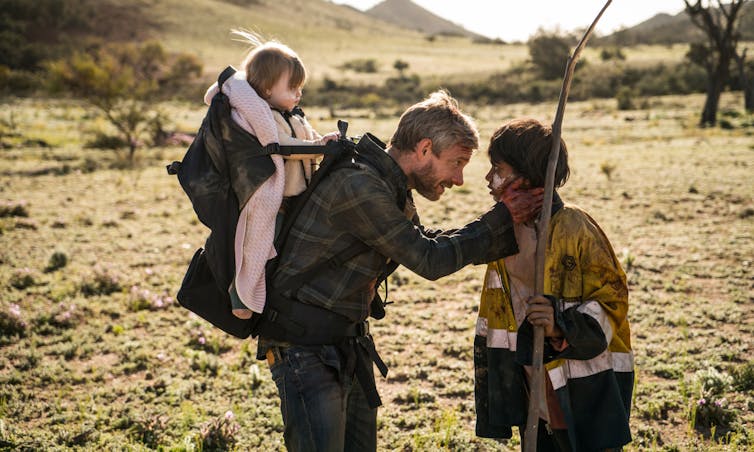
In Cargo, Martin Freeman plays Andy, a man who has to kill his wife after she turns into a zombie and travels across country with baby daughter Rosie on his back.
In Cargo, Martin Freeman plays Andy, a man who has to kill his wife after she turns into a zombie and travels across country with baby daughter Rosie on his back. (Addictive Pictures, Causeway Films, Head Gear Films)

Since the 1970s, some of the best horror films have been made in Australia. Something about the vastness of the continent, and its geographical remoteness from the northern and western hemispheres, lends itself to the kind of existential explorations of alienation that underpin the best examples of this genre.

Peter Weir’s The Cars That Ate Paris (1974) remains one of the great horror comedies, viciously lampooning small-town Australian life. Russell Mulcahy’s Razorback (1984) fully embraces the surreal-gothic potential of the Australian landscape, and the intense terror of Wolf Creek (2005) must have caused at least a few backpackers to reconsider their trips here.

But only one zombie film of note springs to mind, the Spierig Brothers’ brilliantly inventive Undead (2003). Ben Howling and Yolanda Ramke’s recent Cargo, released in Australian cinemas and to Netflix today, is another one. Whereas the Spierig Brothers approached the genre with energy and mirth, Cargo is a much more sombre affair, favouring dramatic realism and an understated visual approach over the garishness more typical of the films of the genre.

The result is mixed. The first half hour is brilliant, slowly building up tension and suspense, but once the narrative kicks into full gear, the film becomes far less satisfying. It’s not that it’s a bad film, it is moderately enjoyable, but given the renowned cast – it stars Martin Freeman, Susie Porter (excellent in a limited role) and legend of the Australian screen, David Gulpilil – and the potential of the genre in an Australian context, it could have been a lot better.

The narrative follows Andy (Freeman), a man who has to kill his wife Kay (Porter) after she turns into a zombie in the opening part of the film, as he travels across country with baby daughter Rosie on his back (his “cargo”) and befriends a teenage girl, Thoomi (Simone Landers). His wife bites him before he dies, so he knows he has only 48 hours remaining as a human, after which he will become one of the intestine eaters (there is an appropriately gross amount of blood and guts in this).


His mission, in his remaining time as a human, is to get Rosie to the group of Aboriginal people to whom Thoomi is also returning. This group have returned to a “traditional” way of living off the land, and are best equipped to repel the zombies. They are presided over by cleverman Daku (Gulpilil), who appears from time to time looking ghostly and saying little. There’s a touch of the noble savage myth about this whole subplot, and the images of blackfella magic are frequently accompanied by mystical-sounding music.

The most interesting encounters in the film are between Andy and Toomi and the several brain-eaters that populate the Australia of the future, but, unfortunately, these are few and far between. Instead, the action is driven by their encounters with several stock Australian film characters.

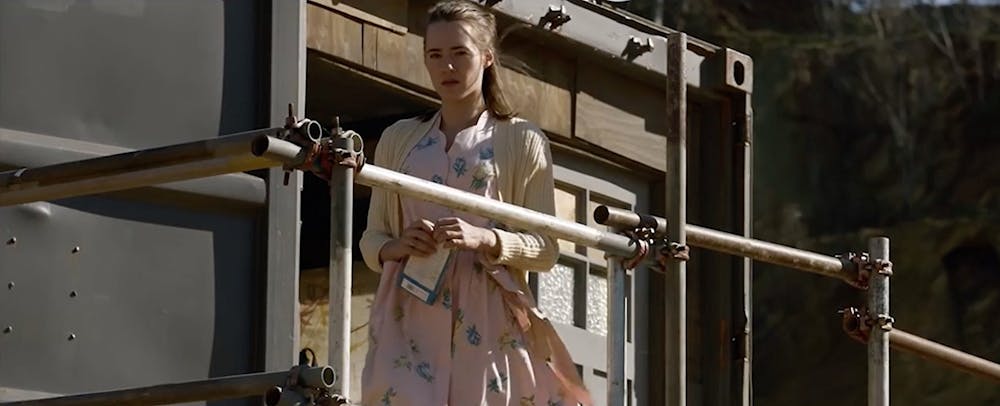
There’s the ethereal-woman in the outback, Lorraine, who seems too delicate to live in such an environment (played by Caren Pistorius in a wooden performance). There’s tough-as-nails Etta (Kris McQuade), an outback school teacher with a heart of gold. And there’s delusional tyrant Vic (played by Anthony Hayes, in a one-note and stilted performance) who is preparing to control Australia’s natural resources once order is restored. He gets his kicks doing really bad things like kidnapping Indigenous people and keeping them locked in cages in order to attract zombies who he then massacres for sport.

Caren Pistorius as the ethereal-woman in the outback, Lorraine.
Caren Pistorius as the ethereal-woman in the outback, Lorraine. (Addictive Pictures, Causeway Films, Head Gear Films)

These are cliches, indeed, but this shouldn’t matter for this kind of genre film. And yet, with Cargo it does. Because it seems to be straining so hard for a sense of gravitas (built through its dramatic verisimilitude and realist style), these cliches become terribly visible and disrupt the viewer’s pleasure. It’s like the filmmakers have deliberately not embraced the ludicrous potential of the subject matter and there is thus an uncomfortable tension between its sombre tone, the absurdity of its premise, and the flatness of its cliched narrative.

The American zombie film, emerging in its contemporary form with the George Romero films beginning with Night of the Living Dead (1968) is generally considered a critique of consumerism in the post-Vietnam era, and the most interesting element of Cargo is its attempt to reimagine the genre in an Australian context that reflects anxieties about the land and its destruction.

The film features scenes, for example, of abandoned fracking sites, and the fact that the whole thing becomes a kind of battle between a power-hungry mining type and Indigenous people could have provided grounds for incisive social and political commentary. But the treatment is unnecessarily sentimental, and it doesn’t feel like there’s any genuine emotional potency by the end. Even the sweeping panoramic shots of the Australian landscape feel contrived and unimpressive, almost like stock drone footage taken from an online tourist commercial.

Alas, Cargo seems like a made-for-Netflix movie – it makes sense, in this context, that it is premiering on Netflix – watchable but also forgettable, after its dazzling opening third. It was developed, furthermore, from a short film that went viral, and like a lot of films made from shorts (or from Saturday Night Live sketches), it feels like it lacks the legs to sustain the length of a feature.

Cargo is worth watching, particularly for fans of horror cinema, but its aesthetic will be best served, I suspect, by the small screen.


About Today's Contributor:
Ari Mattes, Lecturer in Media Studies, University of Notre Dame Australia

This article was originally published on The Conversation

Ice Cream Truck Vs. the Trump USDA: Latest DCX Activist Prank in the News

by
Parody ice cream truck and DCX Team member visit the White House to confront Trump administration
Parody ice cream truck and DCX Team member visit the White House to confront Trump administration (photo credit DCX)
Earlier this week, President Trump grabbed headlines for calling the Mueller investigation "the greatest witch hunt in American history," as well as for reimbursing Michael Cohen for a $130,000 payment to Stormy Daniels.  Meanwhile his administration quietly let expire a popular organic food policy.  
⏩ The Organic Livestock and Poultry Practices (OLPP) rule, which was over ten years in the making, aimed to tighten USDA organic standards and close loopholes that organic activists claim can easily be exploited by industrial producers.  
⏩ The OLPP enjoyed the support of organic farmers and advocates alike (of the 72,000 comments submitted during an open commentary period, 56,000 supported it. Only 50 comments were against these further regulations).
Citing a pattern whereby the president's controversial tweets and personal scandals draw attention away from unpopular policy enactments, a Brooklyn-based group DCX Growth Accelerator launched an ice cream truck, designed to shine the spotlight back upon the Trump administration's meddling with USDA organic food rules.  

DCX painted the name Presidential Creamery on the side of the truck, along with a jovial mascot: a cow udder with a Trump-style toupee waving an ice cream cone. The group drove it to Washington, DC where it drew long lines of consumers, and in recent days have been driving it through the streets of Manhattan, speaking with television news networks. 
The ice cream truck's menu boards are similar in style to those of a quaint organic creamery, but instead of organic products, they list "cage-raised vanilla" milkshakes, "3 chicken per square foot" egg creams, and a sandwich named "the Sonny Perdue Beakless Chicken Po-boy."  The product names refer to the animal welfare protections in the OLPP that were rolled back this week by new Trump-appointed USDA head, Sonny Perdue.  
⏩ The menus describe these foods as "organic-ish" and give them the satirical stamp of a new "certified USDA Organic-ish" logo. 
DCX is known for using creativity to give momentum to social issues. In the past the group has sent students to school wearing bulletproof vests to push for sensible gun control regulation, and has held an Artisanal Landlord Price Hike Sale on behalf of a deli facing an exorbitant rent increase, in order to out gentrification in the national media spotlight.

SOURCE: DCX Growth Accelerator

17 May 2018

'Avengers: Infinity War' Reflects Transformation Of Chinese Movie Market [Video Included]

by
'Avengers: Infinity War' - Chinese poster
'Avengers: Infinity War' - Chinese poster (via therealstanlee.com)
The following is a news report by China.org.cn on the Chinese movie market (scroll down to watch the video):
"The new Disney and Marvel's superhero movie "Avengers: Infinity War" hit the Chinese mainland on May 11. Previously, it raked in US$100 million worldwide in a record 11 days. Despite such success, the movie's popularity in China and the public frenzy for a debut ticket still staggered me.

Sun Wanlu, a china.org.cn reporter, bought her ticket one week in advance, but even then she was only able to get one for the midnight showtime.

Statistics show that the Chinese movie market has been the world's second largest since 2012. In 2017, its total gross reached 55.91 billion yuan, roughly equivalent to US$8.8 billion, or 77.63 percent of the North American market.

China's movie market has undergone enormous transformations in the past years. Decades ago, people had to bring stools from home to watch movies projected onto a screen in the open air. In remote villages, the only opportunity to watch a movie was during an important festival.

After the start of reform and opening up in 1978, especially in the 1980s, Chinese people began going to the cinema more frequently. However, cinemas at that time were minimally available and poorly equipped.

Profound changes have taken place in China's movie industry thereafter. Particularly since its entry into the WTO, China has continually increased its openness, and thus imported more top-billing foreign movies. From "Pearl Harbor" to "The Lord of the Rings" and "Finding Nemo," a large number of European and U.S. blockbusters have brought aesthetic pleasure to Chinese audiences.

Meanwhile, China has also stepped up the reform of its cultural industry, allowing non-government capital to enter the sectors of movie production, release and screening. Nowadays, many modern cinemas have been built in busy business districts full of restaurants and shopping malls. The number of movie screens in China has approached 50,000, and you can find digital cinemas even in rural areas. Also, the yield and quality of domestic movies have improved rapidly. From the Oscar-nominated "Hero" to "Wolf Warrior 2," which achieved total ticket sales of 5.6 billion yuan (US$884.2 million), domestically-produced movies have shared the spotlight on the global stage.

With fast economic growth and the increase of personal income, the Chinese people have developed higher consumption demands. Watching movies has become a popular form of entertainment. Forty years have passed since the introduction of the reform and opening up policy, and the booming development of Chinese movie industry is just one of the achievements China has made in four decades."
A News Report By China.org.cn On The Chinese Movie Market - The Video:
SOURCE:  China.org.cn
Related "Avengers: Infinity War" Stories: 

15 May 2018

"Stop Attacks On Children" [Statement By UNICEF Executive Director Henrietta H. Fore]

by
On 3 April 2018 in the Syrian Arab Republic, children stay at a school-turned shelter in Zeyarah village, north of Aleppo city.
On 3 April 2018 in the Syrian Arab Republic, children stay at a school-turned shelter in Zeyarah village, north of Aleppo city. © UNICEF/UN0207849/Al-Issa (CNW Group/UNICEF Canada)
Statement by UNICEF Executive Director Henrietta H. Fore 

"From the Central African Republic to South Sudan, and from Syria to Afghanistan, attacks on children in conflict have continued unabated during the first four months of the year.

With little remorse and even less accountability, parties to conflict continue to blatantly disregard one of the most basic rules in war: the protection of children.

No method of warfare has been off-limits, no matter how deadly for children: Indiscriminate attacks on schools, hospitals and other civilian infrastructure, abductions, child recruitment, besiegement, abuse in detention, and denial of humanitarian assistance were all too commonplace.

In Yemen, for example, more than 220 children were allegedly killed and over 330 were injured since the beginning of the year as a result of the conflict. Nearly 4.3 million children are now at risk of starvation, a 24 per cent increase over 2017 levels. An acute watery diarrhoea and cholera outbreak which killed more than 400 children under the age of five last year is threatening to claim even more young lives as the rainy season begins and hygiene conditions deteriorate further.

In Syria, hopes for peace remain dim. More than 70 attacks on hospitals and health facilities were verified during the first three months of the year, denying children and families vital health services. Over 300 education facilities have been attacked since the beginning of the conflict. Some 5.3 million children have been internally displaced or became refugees, and nearly 850,000 children continue to live in besieged or hard-to-reach areas.

In Bangladesh, more than 400,000 Rohingya refugee children who survived recent atrocities in Myanmar need humanitarian assistance. As the monsoon season approaches, the risk of cholera and other waterborne diseases is higher than ever.

In South Sudan, the first country I visited as UNICEF Executive Director, at least 2.6 million children have been forced to flee their homes. More than 1 million children are acutely malnourished including over 250,000 severely so and at increased risk of death. Although close to 600 children have been released from armed groups so far this year, around 19,000 continue to serve as fighters, messengers, porters, cooks and even sex slaves for the warring parties.

In Afghanistan, more than 150 children were reported killed and over 400 injured during the first three months of the year because of the conflict.

In the Central African Republic, renewed violence over the past few months has forced nearly 29,000 children to flee their homes, bringing the total number of internally displaced children close to 360,000. More than 2 in 5 children under the age of five suffer from chronic malnutrition and one third of school-aged children are now out of school.

In all these countries and many more, committed teams from UNICEF and partners are doing all they can to alleviate the suffering of the most vulnerable, those separated from their families, terrified and alone, those getting sick in densely populated refugee camps, those on the move in monsoon and unrelenting dry seasons, and those who are starving.

Despite funding shortfalls – we have only received 16 per cent of our funding needs for this year – we are resolutely committed to serving the most vulnerable. We are vaccinating children, treating them for malnutrition, sending them to school, providing them with protection services, and trying to meet their basic needs.

Humanitarian aid alone is not enough. Children need peace and protection at all times. The rules of war prohibit the unlawful targeting of civilians; attacks on schools or hospitals; the use, recruitment, and unlawful detention of children; and the denial of humanitarian assistance. When conflicts break out, these rules need to be respected and those who break them need to be held to account. Enough is enough. Stop attacks on children."
Iraq, 2018: Noor and Sarah walk in the west of Mosul where many buildings have been totally destroyed. "I do not know what happened to my father. He's been missing for three months," says Nour.
Iraq, 2018: Noor and Sarah walk in the west of Mosul where many buildings have been totally destroyed. "I do not know what happened to my father. He's been missing for three months," says Nour. (© UNICEF/UN0161148/Rfaat)
About UNICEF:
UNICEF has saved more children's lives than any other humanitarian organization. We work tirelessly to help children and their families, doing whatever it takes to ensure children survive. We provide children with healthcare and immunization, clean water, nutrition and food security, education, emergency relief and more.

UNICEF is supported entirely by voluntary donations and helps children regardless of race, religion or politics. As part of the UN, we are active in over 190 countries - more than any other organization. Our determination and our reach are unparalleled. Because nowhere is too far to go to help a child survive. 
For more information about UNICEF, please visit unicef.ca.
Democratic Republic of Congo (DRC), 2017: Marie-Pierre Poirier, UNICEF's Regional Director for West and Central Africa, visits the "BaptĆŖme et Graduation Des Capoeristes" in Goma. (© UNICEF/UN0126977/Wessels)

SOURCE: UNICEF Canada


You Might Also Like