6 March 2018

MESSAGE MAN -- A Brutal Action Film Hits Theatres

by
MESSAGE MAN - Poster
Be prepared, as MESSAGE MAN is definitely not for the faint hearted. Australian filmmaker, COREY PEARSON, has successfully raised finance from South East Asia to make his directorial debut film, which is currently playing in Australian theatres, and will soon hit screens world-wide.
What makes MESSAGE MAN unique is the stunning dramatic performances contrasted against graphic violence. The production value is as slick as any Hollywood action film, with stunning cinematography and loads of great fight sequences. Paul O'Brien is compelling as lead character Ryan Teller and the Indonesian cast, including Verdi Solaiman (The Raid), Mario Irwiensyah and Mike Lewis (FoxTrot-6) all deliver world-class performances.
The film is set in the Indonesian archipelagos and stars Australia's own Paul O'Brien (Home & Away). It follows a retired hitman who visits a remote island in Indonesia and befriends a young boy and his family. When the boy is harmed by a group of pirates who are stealing girls off the islands, the assassin's location is revealed to an old enemy, forcing him to embark on one last mission to set things right.
Message Man  (Still)
Message Man  (Still)
"I'm very proud of what we achieved with Message Man. It's not just a shoot-'em up, or cut-'em up film. There's a strong story holding it all together and some great character driven moments," says Writer Director Corey Pearson
Making the film was quite the journey for Corey. "Like every film, we had our fair share of challenges.  We spent many days shooting in remote locations with extreme weather, language barriers and a few hospital visits but it was all worth it."
Corey is also the founder of Rhythmic Films who produced the film alongside HJ Production from Indonesia. Rhythmic Films has established itself as a progressive and cutting edge production company able to work within Indonesia and South East Asia.
"Indonesia is full of incredible locations and talented people, both in front of and behind the camera. The industry there is growing rapidly and I'm excited to be a part of that growth," says Corey.
Message Man  (Still)
Message Man  (Still)
Stay tuned for the machete swinging, sniper shooting, knife slicing MESSAGE MAN screening in select theatres across Australia from 8th March.

The Trailer:


5 March 2018

'Phoenix Wilder: And The Great Elephant Adventure' Offers All-Ages Entertainment While Focusing on Conservation, Debuting in U.S. Cinemas April 16 Only

by
Phoenix Wilder: And The Great Elephant Adventure - Poster
Moviegoers can take a ride through the African plains with two unexpected friends when "Phoenix Wilder: And The Great Elephant Adventure" comes to U.S. cinemas for one night this April. This family-friendly event from Emmy-nominated producer, director and writer Richard Boddington ("The Dogfather," "Against The Wild," "Against The Wild 2") follows a young orphaned boy and his elephant friend on their fight against poaching. Through this remarkable experience, he learns that one person can make a world of difference.
On worldwide Save the Elephant DayMonday, April 16, Fathom Events will present "Phoenix Wilder: And The Great Elephant Adventure" in movie theaters nationwide at 6:00 p.m. local time. In addition to the feature content, audiences will enjoy two exclusive interviews featuring star Elizabeth Hurley ("Austin Powers," "Bedazzled") and renowned elephant conservationist Richard Leakey
"Phoenix Wilder: And The Great Elephant Adventure" - Sam crosses the river
Sam crosses the river (Credit: Patrick Toselli)
Phoenix Wilder, a 13-year-old newly orphaned American boy, receives word that he is to live with his only surviving relative (Elizabeth Hurley) in Africa. While he quickly falls in love with his new surroundings, Phoenix becomes lost on safari, and must learn to survive in the African bush. 

As the search for Phoenix continues, the boy becomes fast friends with a giant bull elephant he frees from a trap. As they begin to bond, Phoenix learns of the threat his new friend faces in the wild. 

The brave young teenager then ends up taking on a band of poachers who are preying on African elephants.
"I first became aware of the severity of the elephant poaching crisis while on a trip to South Africa in 2014," said Boddington. "I then got the idea to make a movie about a boy and his elephant who team up to take down the poachers. I believe that cinema can be used to both entertain and make the world's public aware of serious environmental issues."
"Fathom Events is pleased to bring this inspiring story to the big screen," Fathom Events VP of Programming Kymberli Frueh said. "Nowhere else will audiences be able to experience such compelling content and stunning videography addressing the real impact of poaching and the importance of elephant conservation."
"Phoenix Wilder: And The Great Elephant Adventure" - Sam with baby and parents
Sam with baby and parents (Credit: Patrick Toselli)
⏩ Tickets for "Phoenix Wilder: And The Great Elephant Adventure" can be purchased online by visiting FathomEvents.com or at participating theater box offices. 

Fans throughout the U.S. will be able to enjoy the event in more than 700 select movie theaters through Fathom's Digital Broadcast Network (DBN). 

For a complete list of theater locations, visit the Fathom Events website (theaters and participants are subject to change).
SOURCE: Fathom Events

The Trailer:


3 March 2018

getTV Is Calling All Sci-Fi Geeks And Night Owls To "Get Lost In TV" This March With 1977 Series "The Fantastic Journey"

by
The Fantastic Journey TV Show (77)
Attention, sci-fi adventure geeks and night owls of all ages!  This March, getTV has a retro treat for you: a 10-episode series from 1977, "The Fantastic Journey.
A precursor to the more recent hit show "Lost," the series focuses on a scientific expedition in the Atlantic Ocean that gets lost in the Bermuda Triangle and washes up on an uncharted island. There, the scientists meet up with travelers from other times, planets and dimensions who, like them, are looking for a way off the island and back to their homes.
getTV will air all 10 episodes of "The Fantastic Journey" as part of its weekly "Get Lost in TV" programming over two successive Sunday nights with five episodes each night, beginning March 12 at 12 midnight ET/11pm CT and concluding March 19.  So for those of you who aren't night owls, DVR alert!
The Fantastic Journey" stars Jared Martin (Dusty Martin on "Dallas"), Carl Franklin ("The A-Team," now a prolific film and TV director), Ike Eisenmann ("Escape from Witch Mountain") and Roddy McDowall (the original "Planet of the Apes" films), with appearances by such guest stars as Joan Collins ("Dynasty"), Cheryl Ladd ("Charlie's Angels"), Ian McShane ("Deadwood"), Gerald McRaney ("Simon and Simon"), Susan Howard ("Dallas"), Nicholas Hammond ("The Sound of Music"), Lew Ayres (Oscar nominee for "Johnny Belinda"), Richard Jaeckel (Oscar nominee for "Sometimes a Great Notion"), Gary Collins("Hour Magazine"), Mary Ann Mobley (Miss America 1959), Mel Ferrer ("Lili"), John Saxon ("Enter the Dragon") and Mary Frann ("Newhart").
The show's producer was Leonard Katzman ("Dallas"), executive producer was Bruce Lansbury ("Buck Rogers in the 25th Century" and yes, Angela's brother) and associate producer was William Cairncross(TV's "Logan's Run").
The Fantastic Journey TV Show
The Fantastic Journey TV Show 
Preceding "The Fantastic Journey" on March 12 at 11PM ET/10C is an episode of "The Merv Griffin Show"from 1980 featuring a very early appearance of the new wave band Devo, singing their hit "Whip It."  On March 19, getTV's evening movie at 8:40PM ET/7:40C is the 2000 sci-fi thriller "The 6th Day" starring Arnold Schwarzenegger, followed at 11PM ET/10C by a 1982 "Merv Griffin" episode with the cast of "Star Trek II: The Wrath of Khan."

SOURCE: getTV

The Videos:


2 March 2018

McClelland & Stewart Announces the Publication of Richard Wagamese's Final Novel, Starlight

by
Starlight is the final novel from Richard Wagamese, the bestselling and beloved author of Indian Horse and Medicine Walk.
Starlight is the final novel from Richard Wagamese, the bestselling and beloved author of Indian Horse and Medicine Walk. (CNW Group/Penguin Random House Canada Limited)
McClelland & Stewart is honoured to announce the forthcoming publication of a final novel by the late Richard Wagamese, the beloved, bestselling author of Indian Horse and Medicine Walk
This posthumously published novel, entitled Starlight, will be released on August 14, 2018, in hardcover and as an ebook and audiobook. The deal was arranged by John Pearce of Westwood Creative Artists in association with Chris Casuccio, on behalf of Richard Wagamese's Estate.
Set in the B.C. Interior in 1980, Starlight tells the story of an abused woman on the run with her young child—and what happens once they find refuge on a farm owned by an Indigenous man with wounds of his own. Frank Starlight has long settled into a quiet life working his remote farm, but his contemplative existence comes to an abrupt end with the arrival of Emmy, who has committed a desperate act so she and her child can escape a harrowing life of violence. Starlight takes in Emmy and her daughter to help them get back on their feet, and this accidental family eventually grows into a real one. But Emmy's abusive ex isn't content to just let her go. He wants revenge and is determined to hunt her down.
Sadly, Starlight was unfinished at the time of Wagamese's death, yet it is a rapturous and profoundly moving story of love, compassion, mercy, and the consolations to be found in the natural world. There are clear indications of Wagamese's intentions for the remainder of the book, based on the recollections of trusted intimates with whom he periodically shared his ideas about his novel-in-progress. 
The Note on the Text that appears at the end of the book summarizes these ideas and includes a scene that Wagamese intended to adapt for the final scene of Starlight
The book will also include a previously unpublished essay by Wagamese, entitled "Finding Father." The themes and images in this deeply personal essay resonate beautifully with those in the novel, allowing for the larger narrative circle to be closed by Richard Wagamese himself.
McClelland & Stewart Senior Editor Anita Chong said: "When Richard Wagamese died in March 2017, we lost one of our great writers. While it is tragic that Richard did not have the chance to complete what was clearly his masterpiece, what he accomplished in the pages of Starlight is deserving of celebration. And we can't imagine a more fitting tribute to Richard Wagamese, a man who believed in the healing power of story, than to share his majestic last novel with readers."
Canadian novelist, Richard Wagamese
Celebrated Canadian novelist, Richard Wagamese (CNW Group/Penguin Random House Canada Limited)
Richard Wagamese was one of Canada's foremost writers. 

His celebrated, bestselling novels included Keeper'n MeIndian Horse, which was a Canada Reads finalist, winner of the inaugural Burt Award for First Nations, MĆ©tis and Inuit Literature, and made into a feature film; and Medicine Walk
He was also the author of acclaimed memoirs, including For JoshuaOne Native Life; and One StoryOne Song, which won the George Ryga Award for Social Awareness in Literature; as well as a collection of personal reflections, Embers, which received the Bill Duthie Booksellers' Choice Award. 
He won numerous awards and recognition for his writing, including the National Aboriginal Achievement Award for Media and Communications, the Molson Prize for the Arts, the Canada Reads People's Choice Award, and the Writers' Trust of Canada's Matt Cohen Award. 
Wagamese died on March 10, 2017, in Kamloops, B.C.

SOURCE: Penguin Random House Canada Limited

1 March 2018

Men's Liberation: What Today's #MeToo Sceptics Can Learn From Their 1970s Brothers

by

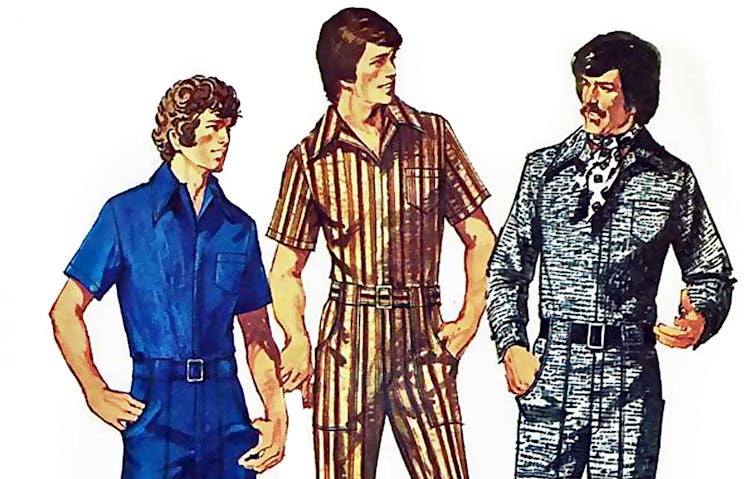
70s men
James Vaughan, CC BY-NC-SA
The ubiquity of sexism and sexual abuse is finally becoming part of the mainstream conversation about patriarchal culture as a result of #MeToo and the Harvey Weinstein scandal. Male privilege has been so tightly laced into the fabric of daily life for so long that many people – men and women alike – have developed a blind spot for it.

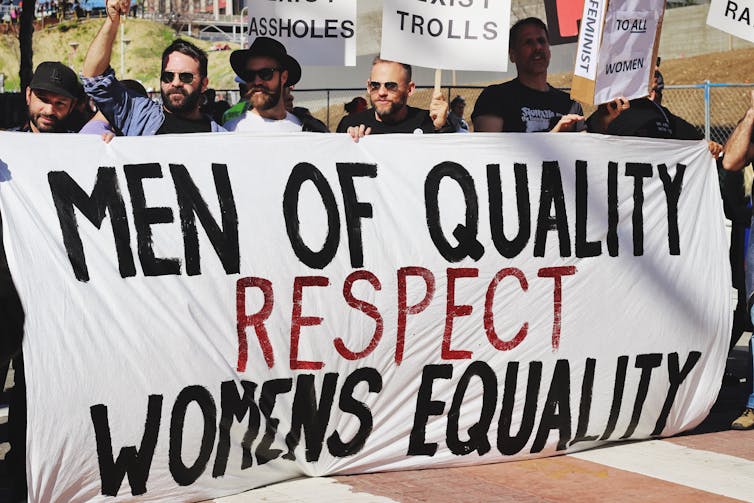
Responses among men to the recent outpouring of accusations have been mixed. Some have declared their support for the women (and, occasionally, men). Others feel victimised. Of course, the desired outcome of all this is not to break men’s spirits through endless criticism, but to acknowledge that they can play a vital role in establishing a new consensus. If men don’t do their share of the work, then equality will only ever be a distant dream.

This discussion has a history – one that reveals an achingly slow pace of change. Its origins lie in the 1970s, when small groups of progressively minded men began to look beyond the reductive gender roles that they had been conditioned into.

The 1970s was a transitional decade, when critiques of sexism became progressively louder and confrontational. And yet, the persistent unwillingness of mainstream culture to acknowledge male vulnerability showed how profoundly ill at ease society still was with these sorts of changes. It was the straitjacket definition of masculinity that the “men’s liberation” movement (not to be confused with the more recent, reactionary “men’s rights” movement) wanted to challenge.

Although hardly mainstream, writers such as Andrew Tolson, Jack Nichols and Arthur Brittain formed part of a loose network of men in Britain and America who sought to respond positively to second-wave feminism.

They were committed to freeing men (and the women who had to live with them) from narrow definitions of masculinity that left little space for emotions other than anger. Through books, workshops and underground magazines such as Achilles Heel, these writers and activists adopted the language and aims of the women’s movement. Part gender theory, part advice literature, the work they produced was a gentle call to arms.

Masculinist mystique
In his 1975 book Men’s Liberation: A New Definition of Masculinity, American writer Nichols criticised the myths that constructed men as naturally dominant, aggressive and emotionally detached. Using the phrase “masculinist mystique”,’ Nichols consciously echoed the American feminist Betty Friedan who, in 1963, had coined the term “feminine mystique” to describe the deep sense of emptiness that could afflict suburban housewives.

The inflated aggression and chauvinism that men were encouraged to cultivate, Nichols asserted, put up barriers between them. It was a force keeping them in an endless cycle of competition and one-upmanship. In fostering a sense of community amongst progressively minded men, Nichols attempted to break down the barriers that prevented them from being emotionally honest, vulnerable and authentic with each other.

They’ve been doing their reading
They’ve been doing their reading. samantha sophia unsplash

Similarly, in his books and workshops, British writer Tolson explored the seemingly invisible structures that reinforced men’s often negative sense of entitlement. The front that many men projected, he believed, was often profoundly at odds with their real feelings. This undermined their mental health and ability to connect with others. Tolson’s main interest was the way that social settings shaped and reinforced toxic masculinity. A man might “cultivate, even fabricate his masculine presence,” through stories exaggerating his romantic and economic prowess. By presenting a version of masculinity to the world which was “increasingly under attack” from feminist and gay rights campaigners, he maintained, men were falling prey to self-limiting behaviour.

Tolson encouraged men to become comfortable expressing their emotions and talking honestly about themselves. In his discussion groups, men talked about relationships, body image and their attitudes to women. Tolson urged them to curb their desire to dominate in relationships, which the 70s fashion for promiscuity, polygamy and communal living didn’t do enough to challenge. In fact, even in potentially progressive relationship set-ups, men could hold on to old attitudes:
To be inside a … couple, however open … is to be part of a mutual negotiation. And one of the more insidious tendencies of the middle-class male is a liberalism which conceals, but in the end reproduces, his traditional power.
The ConversationThis is the reality that we are now having to confront, more than 40 years on, as we try to understand how so many apparently liberal men can abuse their power with such impunity. Tolson’s point that deeply buried male privilege can conceal itself within an otherwise spotless set of progressive values is one we are still grappling with. The brief flowering of men’s liberation may not have achieved much mainstream success, but it was a meaningful moment of cooperation in a decade fraught with factionalism. In an era that celebrated Miss World as mainstream family entertainment, recognising that men could overcome their conditioning to become human beings was a good place to start.

About Today's Contributor:
Emily Priscott, Doctoral Researcher in Contemporary British History, University of Sussex

This article was originally published on The Conversation

You Might Also Like